

Candle Trimming: Elevate Rituals and Candle Performance
Lighting a handcrafted candle sets the mood for moments of calm, but one overlooked habit can make all the difference. For eco-conscious Europeans who value mindful living and a serene home, proper candle trimming is more than a detail—it is the start of a cleaner, longer-lasting burn and a richer scent experience. This guide explores the art of candle trimming, showing how a mindful approach unlocks the full benefits of your favorite artisanal candles, enhancing both your ritual and your space. Bold a key concept: proper candle trimming.
Defining Candle Trimming and Its Purpose
Candle trimming is the practice of cutting your wick to a specific length before each burn. This simple ritual transforms how your candle performs, how long it lasts, and how beautifully it scents your space.
At its core, trimming prevents common candle problems. A wick that’s too long burns too hot, creating excessive flame, smoke, and soot. Cutting the wick to a specific length ensures an even and clean burn that enhances both lifespan and scent effectiveness.
Why does this matter for your daily ritual? When you trim consistently, you’re taking an active role in your candle’s story.
The core benefits of regular trimming:
- Prevents tunneling (that wasteful gap down the center of your candle)
- Eliminates soot buildup on glass and walls
- Creates a brighter, more controlled flame
- Extends your candle’s lifespan significantly
- Optimizes scent throw and performance
- Protects your home from smoke and residue
Think of trimming like tending a garden. You wouldn’t let plants grow wild—you’d nurture them intentionally. Candles deserve the same care.
Regular wick trimming is the difference between a candle that lasts weeks and one that lasts months. It’s the most overlooked step in candle care.
Our mi KALMA candles are handcrafted from 100% natural European-sourced rapeseed wax with premium, phthalate-free fragrance oils designed and produced in France. This exceptional foundation means your candle already has the chemistry for an outstanding burn. Trimming your wick unlocks that potential fully.
Proper wick maintenance also works hand-in-hand with your ritual practice. When you trim mindfully before lighting, you’re creating a pause—a moment of intention. That’s the luxury of slow living embedded in simple maintenance.
Pro tip: Trim your wick to approximately one quarter inch before each lighting session; this length delivers the cleanest burn and most stable flame for extended enjoyment.
Types of Candle Wicks and Wax Differences
Not all wicks are created equal, and neither are all waxes. The combination of these two elements determines whether your candle burns cleanly or creates problems.
Candle wicks serve a single, critical purpose: they draw liquefied wax into the flame. But how they do that varies significantly based on their construction and material.
Understanding Wick Types
Candle wicks are designed to influence burn stability and flame size, with several distinct types serving different purposes.
Common wick varieties include:
- Flat wicks—self-trimming, ideal for taper and pillar candles
- Square wicks—preferred for beeswax candles due to their structure
- Cored wicks—contain cotton or metal cores for added stability
- Wooden wicks—deliver aesthetic appeal and a crackling effect
Each wick type behaves differently depending on wax composition. A wooden wick paired with the wrong wax may tunnel or smoke. A square wick performs beautifully in beeswax but may struggle in others.
Here’s an at-a-glance guide to popular wick types and their key characteristics:
| Wick Type | Ideal Wax Pairing | Unique Advantage | Common Use Case |
|---|---|---|---|
| Flat wick | Paraffin, rapeseed | Self-trims while burning | Pillar and taper candles |
| Square wick | Beeswax | Supports upright stability | Beeswax pillars |
| Cored wick | Paraffin, blends | Enhanced burn consistency | Scented container candles |
| Wooden wick | Soy, rapeseed blends | Aesthetic crackling effect | Modern luxury candles |
This is why mi KALMA’s premium formulation matters. Our 100% natural European-sourced rapeseed wax was extensively tested with various wick types to ensure optimal performance. After rigorous development, we identified the perfect match—a pairing that produces a clean, stable burn without compromise.
Wax Type and Performance
Wax quality directly impacts how your candle behaves and how effectively it releases fragrance. Low-quality paraffin wax from mass-produced candles often produces soot and inconsistent burns.
Natural waxes perform differently. Rapeseed wax, our chosen material, offers several advantages:
- European sourced—lower transport footprint than imported soy or coconut
- Renewable crop—sustainable and environmentally responsible
- Superior burn quality—cleanest flame and most stable performance
- Enhanced scent throw—works harmoniously with our phthalate-free, French-designed fragrance oils
The relationship between wax and wick is where true candle science happens. Rapeseed wax has a specific melting point and viscosity that allows our chosen wicks to draw fuel efficiently without burning too hot or creating waste.
The wax-wick pairing is not negotiable. A premium wick in cheap wax still produces a poor candle. Quality demands both elements working in concert.
When you trim your mi KALMA candle’s wick before each burn, you’re maintaining the relationship between wax and wick that our founders, Deins and Kriss, perfected in Amsterdam. This attention to detail separates ritual candles from commodity products.
Pro tip: If you use wooden wicks, trim them to approximately three-eighths inch to prevent excessive smoking and ensure the wax pool stays manageable throughout the burn.
Proper Techniques and Essential Tools
Trimming your candle wick is straightforward, but doing it correctly makes all the difference. The right tools and technique prevent accidents, protect your candle, and ensure consistent performance.
Start by waiting until your candle is completely cool before trimming. Never trim a hot or burning candle. This simple rule prevents burns and keeps you safe.
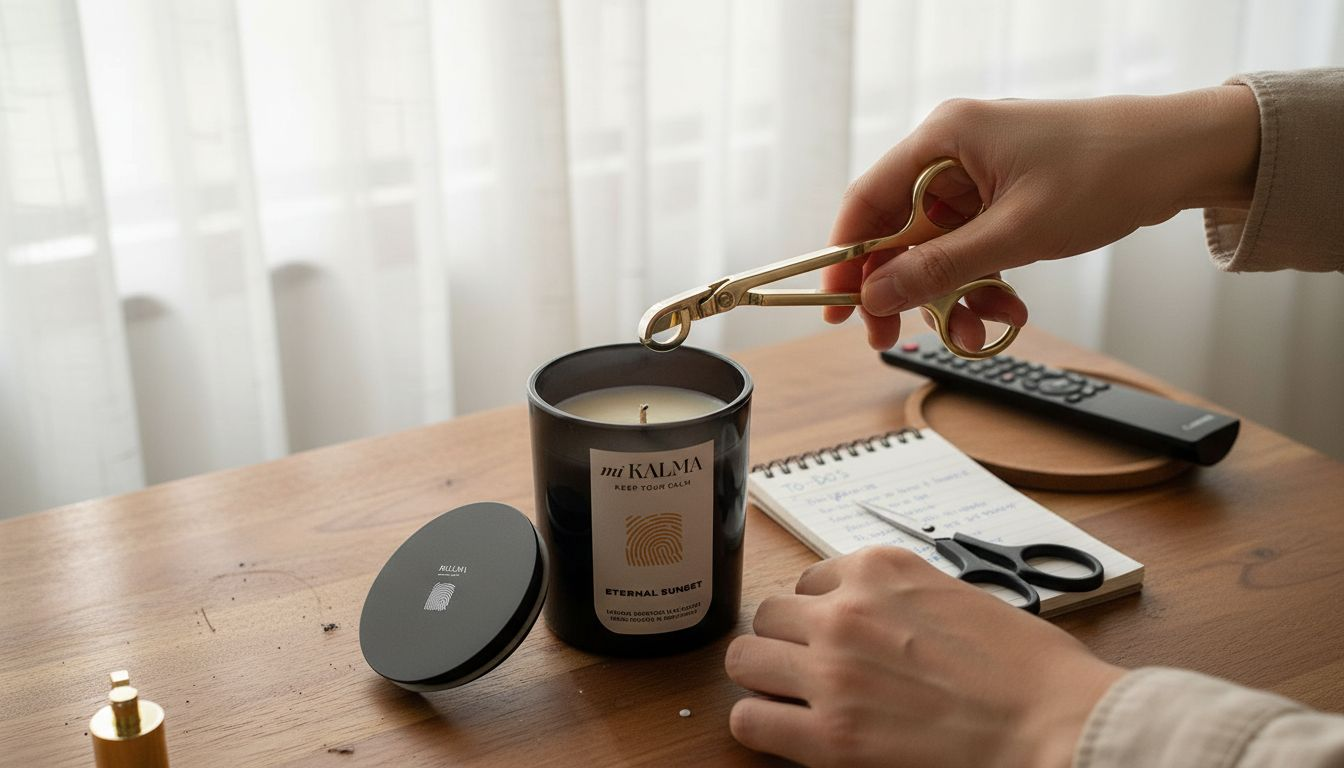
The Right Tools
You don’t need expensive equipment. The best options include dedicated wick trimmers, sharp scissors, or manicure scissors that give you precision control.
Essential trimming tools:
- Wick trimmers—purpose-built with angled blades for clean cuts
- Sharp scissors—standard household scissors work if they’re genuinely sharp
- Manicure scissors—excellent for precise, controlled trimming
- Small utility knife—useful for scraping hardened wax buildup
A dedicated wick trimmer offers the best experience. The angled design positions your hand safely away from the candle, and the cutting mechanism delivers clean, precise cuts every time. Mi KALMA offers a refined wick trimmer designed specifically for our candles and crafted with the same attention to detail.
The Trimming Process
Proper candle trimming involves using sharp tools to cut the wick to approximately one-quarter inch before each burn.
Follow this straightforward sequence:
- Allow the candle to cool completely after previous burn
- Position your trimmer or scissors around the wick
- Cut vertically to achieve a clean, one-quarter inch length
- Remove any wick debris or loose particles
- Check that the wick is centered in the candle
- Scrape any hardened wax from the candle’s edges using a utility knife
Centering matters. When wax pools evenly around a centered wick, your candle burns uniformly and releases fragrance optimally. Hardened wax buildup on the glass edges of your mi KALMA’s black glass jar doesn’t affect performance, but gently removing it keeps your ritual space looking refined.
Safety First
Keep these precautions in mind during your trimming ritual:
- Trim on a stable, flat surface where the candle won’t tip
- Ensure proper ventilation in your space
- Keep flammable materials away from your work area
- Supervise children and pets during the trimming process
- Use sharp tools to avoid slipping and accidentally damaging the candle
A sharp tool is actually safer than a dull one. Dull scissors require excessive pressure, which can slip or damage your candle. Keep your trimmer sharp.
This ritual of cooling, trimming, and centering is part of the mindfulness that elevates candle burning from passive consumption to intentional practice. You’re not just maintaining a product; you’re honoring the craft that went into creating it.
Pro tip: Trim your wick immediately after the candle cools, before wax fully hardens, for the easiest cuts and to prevent debris from settling back into the wax.
Benefits for Aroma, Longevity, and Safety
Regular wick trimming delivers three concrete advantages that transform your candle experience. These benefits compound over time, making trimming a non-negotiable part of candle care.
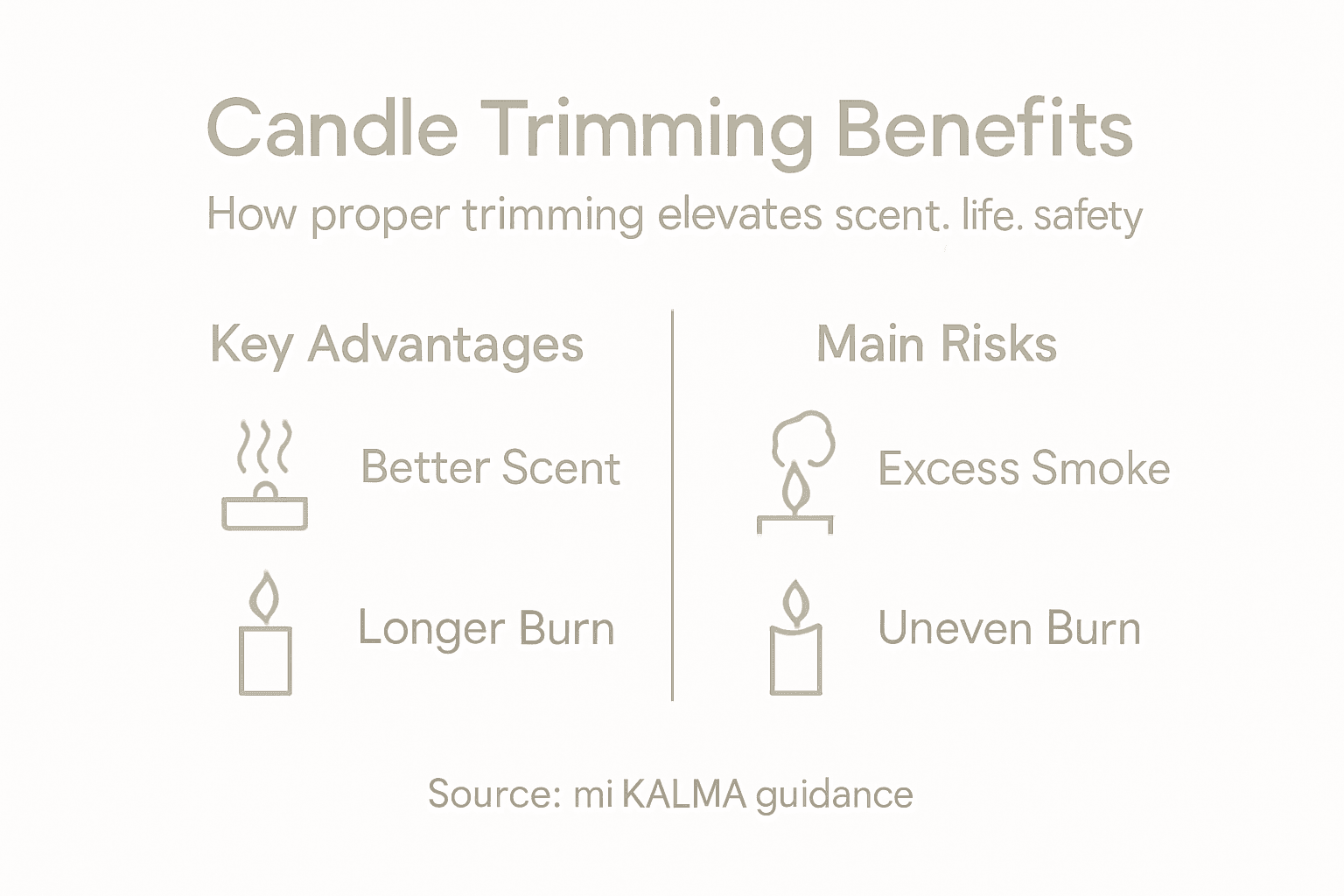
Enhanced Fragrance Diffusion
Consistent wick trimming controls flame intensity, which directly enhances how your candle releases scent into your space.
A trimmed wick produces a steady, controlled flame that vaporizes wax evenly. This consistency means your fragrance oils—especially our phthalate-free, French-designed formulas—disperse uniformly throughout your home.
When a wick grows too long, the flame becomes erratic. It burns too hot in some spots, too cool in others. This uneven burning wastes fragrance and creates an inconsistent scent experience.
Mi KALMA’s premium rapeseed wax pairs perfectly with our optimized fragrance oils. But this partnership only reaches its full potential when your wick is properly maintained. Trimming unlocks the complete aromatic profile.
Extended Candle Lifespan
Proper trimming prevents tunneling—that wasteful gap down your candle’s center. When tunneling occurs, wax melts only around the wick, leaving solid wax along the sides untouched.
This is where trimming creates real economic value:
- A trimmed wick burns at the correct temperature
- Wax pools evenly across the entire surface
- No wax is left behind when the candle finally burns out
- Your candle lasts weeks longer than it would otherwise
A mi KALMA candle that would normally provide 40 hours of burn time can easily extend to 50 or 60 hours with consistent trimming. That’s months of additional ritual and atmosphere in a single candle.
Safety and Air Quality
Soot and smoke create indoor air quality problems that most people don’t notice until it’s too late. Black residue accumulates on ceilings, walls, and furniture.
Trimming reduces smoke and soot production while preventing the large, unstable flames that pose fire risks. These aren’t minor concerns—they’re genuine health and safety issues.
Proper flame control means:
- Cleaner air in your home
- No black soot deposits on your walls
- Reduced fire hazard from oversized flames
- Protection for your furnishings and decor
Our natural rapeseed wax produces far less soot than paraffin alternatives, but even premium wax produces excess soot with an improperly trimmed wick.
A well-maintained candle is a safe candle. Trimming isn’t just about aesthetics or fragrance—it’s about protecting your home and your family.
These three benefits work together. Better fragrance means more satisfaction. Longer lifespan means better value. Superior safety means peace of mind. Trimming delivers all three.
See how trimming habits directly affect your candle’s efficiency and safety:
| Trimming Routine | Scent Strength | Burn Time Extension | Soot Production |
|---|---|---|---|
| Consistent (before burn) | Strong, uniform | 20-40% longer | Minimal, clean glass |
| Skipped trimming | Weak, uneven | Reduced, wastes wax | High, causes staining |
| Over-trimming | Faint, unstable | Difficult to keep lit | Variable, poor burn |
Pro tip: Record your candle’s initial burn time, then track how long it actually lasts with consistent trimming—you’ll be surprised by how much longer your candle performs.
Risks, Misconceptions, and Common Mistakes
Not trimming your wick creates a cascade of problems. Understanding what goes wrong—and why—helps you avoid pitfalls that diminish your candle experience.
The Cost of Skipping Trimming
Not trimming wicks leads to soot buildup, uneven burns, and genuine fire hazards. This isn’t a minor maintenance task—it’s the difference between a safe candle and a problematic one.
When you skip trimming, your wick grows longer with each burn. A long wick creates excessive heat, which produces heavy black soot that stains your walls and ceiling. Over months, this accumulation becomes visible and difficult to clean.
Soot also clogs the air in your home. You might not smell it, but you’re breathing it. For people with respiratory sensitivity, this becomes a real concern.
Common Misconceptions
Many people believe incorrect information about candle care. These myths lead directly to poor results.
Misconception #1: Short burn times are always better
Fact: Candles need adequate burn time to develop a full wax pool. If you burn your candle for only 30 minutes, the wax never melts completely across the surface. This causes tunneling and wastes wax along the edges. Aim for at least 2-3 hours per burn session with a properly trimmed wick.
Misconception #2: All wicks perform the same way
Fact: Wick size and material must match your wax. An oversized wick in mi KALMA’s rapeseed wax will burn too hot. An undersized wick won’t produce adequate scent throw. Proper pairing is essential.
Misconception #3: Trimming is optional
Fact: Regular trimming is foundational candle care. Without it, you sacrifice fragrance, lifespan, safety, and the beauty of your ritual.
Mistakes That Damage Your Candle
Beyond skipping trimming, other errors compound problems:
- Trimming too short and missing the wick entirely
- Trimming a hot candle and burning yourself
- Letting wick debris fall into melted wax
- Ignoring black soot buildup on the glass
- Burning candles in drafty spaces without adjusting wick length
The most expensive mistake is buying premium candles and then neglecting basic care. You’re investing in quality—honor that investment with simple maintenance.
Mi KALMA candles are handcrafted with exceptional rapeseed wax and French-formulated fragrance oils. But even premium materials require proper stewardship. Trimming is how you protect your investment and maximize every aspect of your candle.
Pro tip: If you notice black soot on your candle’s glass jar, stop burning it immediately and trim the wick aggressively—this signals the wick is too long and the flame is too hot.
Elevate Your Candle Ritual with Expert Care and Premium Tools
The key to unlocking your candle’s full potential lies in attentive wick care and the perfect blend of natural materials. If you want to prevent soot, extend your candle’s lifespan, and experience the rich fragrance your space deserves, start by embracing regular candle trimming. At mi KALMA, we understand that candle maintenance is not just a chore—it is a mindful practice that enhances your sensory journey and safeguards your home.

Discover our curated Candle Accessories – mi KALMA collection featuring precision wick trimmers and snuffers designed to support a clean, controlled burn every time. Pair these with our luxurious Candle Collection – mi KALMA crafted from sustainable European rapeseed wax to elevate your ritual. Experience the harmony of quality craftsmanship and intentional care by visiting https://mikalma.com today and begin transforming your candle experience into a cherished moment of calm and connection.
Frequently Asked Questions
What is candle trimming and why is it important?
Candle trimming is the practice of cutting the wick to a specific length before each burn. It’s important because it prevents common candle problems such as excessive soot, uneven burns, and tunneling, ultimately enhancing the candle’s lifespan and scent throw.
How often should I trim my candle wick?
You should trim your candle wick before each burn, ideally to about one-quarter inch. This ensures a clean burn, a stable flame, and optimal scent diffusion while preventing soot buildup.
What tools do I need for trimming candle wicks?
Essential tools for trimming candle wicks include dedicated wick trimmers, sharp scissors, or manicure scissors. A dedicated wick trimmer is recommended for precise control and safety.
What happens if I don’t trim my candle wick?
If you skip trimming, the wick can grow too long, leading to excessive heat and unsightly soot buildup, which can stain walls and ceilings. Additionally, a long wick can create an unstable flame that poses safety risks and reduces the candle’s overall performance.