

Role of Scent in Home Decor: Elevating Wellness
Choosing the right scent for your home is more than adding a pleasant touch—it is a mindful step toward crafting meaningful spaces that nurture well-being and reflect your unique taste. For eco-conscious urban dwellers who value luxury handcrafted candles, understanding the emotional impact of fragrance can transform relaxation and home decor. Discover how thoughtful scent selection supports sustainable living, enhances your sanctuary, and communicates your personal style at every flicker.
What Scent Means in Home Decor Spaces
Scent represents far more than a pleasant background element in home design. It is a powerful sensory tool that transforms living spaces, communicating emotional landscapes and creating immersive atmospheric experiences. Multisensory design research reveals how ambient fragrances profoundly influence mood and psychological well-being.
In home decor, scent serves multiple strategic functions beyond simple olfactory pleasure. It acts as an invisible design element that can:
- Establish emotional zones within living spaces
- Signal specific functional intentions for rooms
- Create psychological transitions between different home environments
- Communicate personal identity and aesthetic preferences
Critically, scents are not just random fragrances but carefully curated sensory experiences. Scent classification research demonstrates how different fragrance profiles can evoke specific conceptual meanings - from energetic and dynamic to calm and contemplative.
Professional interior designers understand that scent works like an additional layer of decor, complementing visual and textural elements. A vanilla or lavender candle might suggest tranquility in a bedroom, while a citrus fragrances could energize a home office space. The strategic placement of scents can transform mundane rooms into emotionally resonant environments.
Pro tip: Select candle scents that align with each room’s intended emotional atmosphere, treating fragrance as an intentional design element rather than an afterthought.
The Science Behind Fragrance and Emotion
The connection between fragrance and human emotion is far more complex and scientifically profound than previously understood. Neurological research demonstrates that scents can trigger immediate and measurable changes in our emotional states, with direct pathways linking olfactory perception to brain regions responsible for mood regulation.
Our emotional responses to fragrance are rooted in deep neurobiological mechanisms. The olfactory system has a unique neurological architecture that directly interfaces with key emotional processing centers:
- Amygdala: Processes emotional memories and responses
- Hippocampus: Connects scent to specific memories and experiences
- Limbic system: Manages emotional and psychological reactions
Comprehensive neuroscience reviews reveal that this intricate neural network explains why certain scent memories can instantly transport us back to specific moments, triggering complex emotional landscapes with remarkable intensity.
The psychological impact of fragrance extends beyond mere memory retrieval. Different scent profiles can actively modulate emotional states, influencing stress levels, cognitive performance, and overall psychological well-being. Lavender might induce calm, while citrus can boost energy levels, demonstrating the neurochemical power of olfactory stimulation.
Pro tip: Experiment with different fragrances during various emotional states to understand your personal neurological responses and create intentional mood management strategies.
Types of Scents and Their Impact on Mood
Essential oil research reveals that different scents can profoundly influence our emotional states, transforming home environments into intentional wellness spaces. Each fragrance type carries unique psychological properties, capable of modulating mood, energy levels, and cognitive performance with remarkable precision.
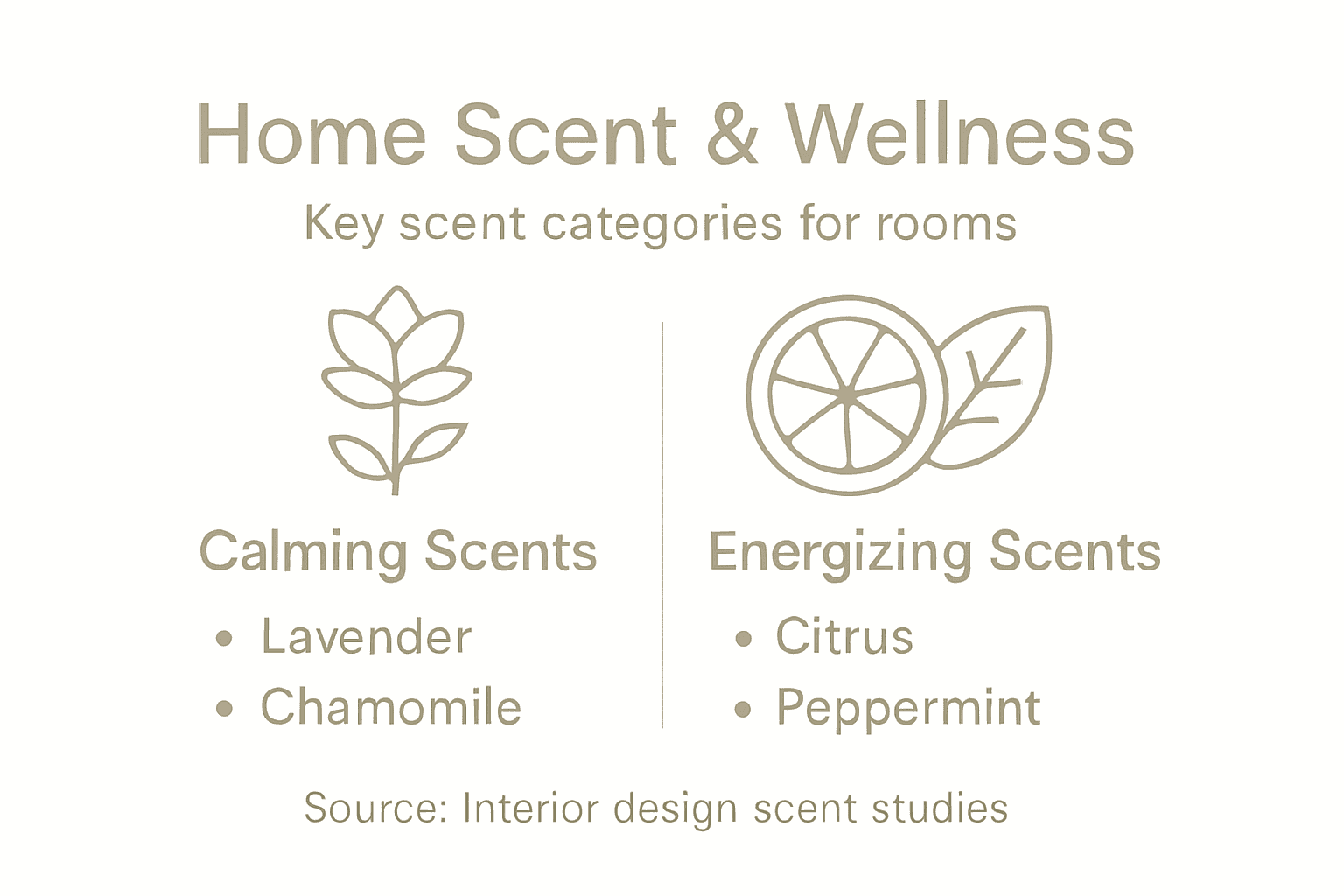
The primary categories of mood-enhancing scents include:
-
Calming Scents:
- Lavender: Reduces stress and promotes relaxation
- Chamomile: Induces tranquility and reduces anxiety
- Vanilla: Creates a sense of comfort and emotional security
-
Energizing Scents:
- Citrus (lemon, orange): Boosts alertness and positive mood
- Peppermint: Increases mental clarity and focus
- Rosemary: Enhances cognitive performance and memory
Fragrance compound studies demonstrate that these scents interact directly with the limbic system, triggering specific neurochemical responses that can dramatically alter psychological states. The neurological impact of fragrances extends far beyond simple pleasant sensations.
Understanding these scent profiles allows individuals to curate home environments that actively support mental well-being. By strategically selecting fragrances based on desired emotional outcomes, people can transform their living spaces into personalized wellness sanctuaries that respond to their psychological needs.
Sustainable Scented Decor: Candles and More
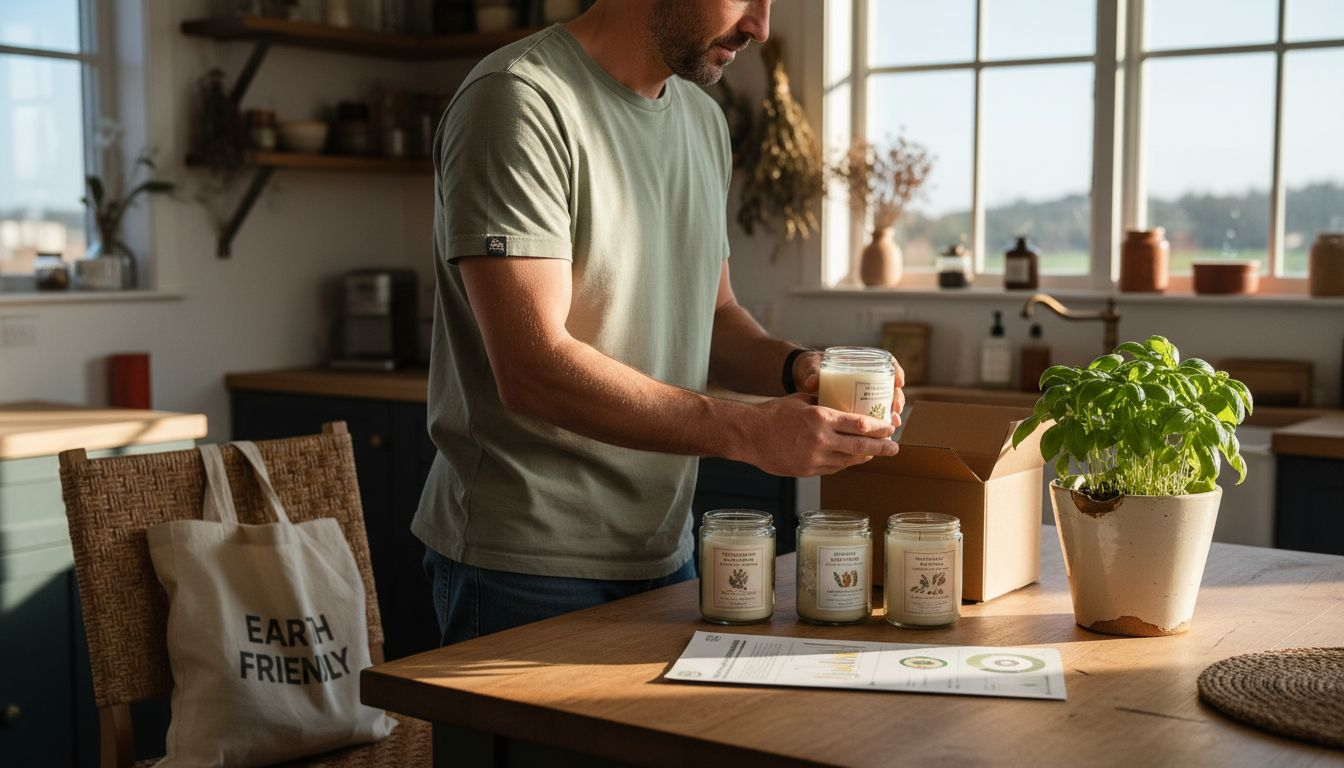
Candle production research reveals a growing movement towards environmentally conscious home fragrance solutions that balance sensory experience with ecological responsibility. Sustainable scented decor goes beyond aesthetic appeal, focusing on minimizing environmental impact while creating wellness-oriented living spaces.
Key characteristics of sustainable scented decor include:
-
Eco-Friendly Materials:
- Natural wax alternatives (rapeseed wax or soy wax)
- Biodegradable ingredients
- Minimal chemical processing
-
Sustainable Production Practices:
- Renewable energy manufacturing
- Reduced carbon emissions
- Ethical & local sourcing of raw materials
- Recyclable packaging
Sustainable candle production studies demonstrate that eco-conscious consumers increasingly prioritize environmental transparency in home fragrance products. These consumers seek brands committed to circular economy principles, demanding products that are both aesthetically pleasing and ecologically responsible.
Elevate Your Home Atmosphere with Intention and Elegance
Understanding how scent shapes emotional landscapes in your home is the first step to creating a sanctuary of wellness and calm. Many people struggle with selecting fragrances that truly support their desired mood and well-being while avoiding sensory overload or synthetic chemicals. By embracing carefully crafted, paraben free scents you can turn your living spaces into intentional wellness environments that boost relaxation, focus, or comfort based on your needs.
Discover the power of artisanal candles made from sustainably sourced European rapeseed wax at Candle Collection – mi KALMA. These vegan-friendly candles are designed for those who value ecological responsibility and sophisticated sensory experiences.
Explore our exclusive selection to find scents that align perfectly with your home’s emotional zones. Complement your experience with elegant tools from our Candle Accessories – mi KALMA collection that enhance ambiance and care. Visit https://mikalma.com now to take control of your home’s scent story and transform everyday spaces into personalized havens of calm and connection.
Frequently Asked Questions
What role does scent play in home decor?
Scent serves as an invisible design element in home decor, establishing emotional zones, signaling room functionalities, and creating psychological transitions between different spaces. It enhances the overall atmosphere and communicates personal identity.
How can I select fragrances for different rooms in my home?
Consider the intended emotional atmosphere of each room. For calming spaces like bedrooms, choose scents like vanilla, lavender or chamomile. For energizing environments such as home offices, opt for citrus fruits or peppermint fragrances to boost productivity and focus.
What are some common pitfalls to avoid when choosing home fragrances?
Common mistakes include using multiple competing fragrances, selecting intense scents for small spaces, and overlooking potential allergic reactions. It’s essential to consider personal sensitivities and room size when selecting scents.
How do different scents affect mood and well-being?
Different scents can significantly alter mood and well-being. For example, calming scents like vanilla can reduce stress, while energizing scents like citrus (lime, orange, lemon, mandarin) can enhance alertness. Understanding these effects allows you to create a more supportive home environment.