

What Is a Cruelty-Free Candle and Why It Matters
Searching for the perfect candle can feel like a moral minefield when every label shouts “eco-friendly” or “cruelty-free.” For mindful consumers who seek both elegance and ethics, unraveling the truth behind these claims is more important than ever. The term “cruelty-free” lacks a universal legal definition, leaving plenty of room for confusion and clever marketing. Discover how transparency, ingredient integrity, and genuine sustainability set real luxury candles apart from those just posing as ethical.
Defining Cruelty-Free Candles and Common Myths
A cruelty-free candle is one made without harming or testing on animals at any stage of production. This sounds straightforward, but the reality is far more nuanced than most consumers realize.
The term “cruelty-free” lacks a universal legal definition, which creates significant confusion. What qualifies as cruelty-free varies dramatically depending on country regulations, brand claims, and certification standards. This ambiguity means consumers often rely on moral assumptions rather than verified facts when making purchasing decisions.
Here’s what truly defines a cruelty-free candle:
- No animal testing for the candle, wax, fragrance oils, or colorants
- No animal-derived ingredients (though some debate exists around beeswax)
- No testing by parent companies or suppliers in the production chain
- Transparent sourcing that can be verified or certified by third parties
mi KALMA’s candles meet these standards through carefully sourced European rapeseed wax and vegan, phthalate-free fragrance oils produced in France without animal testing. Every ingredient is selected for both quality and ethical integrity.
Myth 1: All Natural Candles Are Automatically Cruelty-Free
Natural wax doesn’t guarantee cruelty-free status. Beeswax is natural but involves beekeeping practices that some consider exploitative. Soy and coconut wax may involve animal habitat destruction or labor concerns. Understanding cruelty-free definitions reveals that material origin matters less than how producers source and test ingredients.
Rapeseed wax stands apart because it’s renewable, locally sourced in Europe with lower transport emissions, and certified free from animal testing throughout production.
Myth 2: The “Cruelty-Free” Label Means Everything Is Verified
No regulatory body legally enforces “cruelty-free” claims in most countries. Brands can self-declare without third-party verification, leading to greenwashing and misleading marketing. Consumer perceptions of cruelty-free products show how this ambiguity creates a “halo effect”—people assume brands are more ethical than they actually are.
Look for transparent sourcing practices, certifications from recognized organizations, and detailed ingredient disclosures rather than relying solely on marketing language.
Myth 3: Cruelty-Free Means Less Effective or Lower Quality
Quality and ethics aren’t opposites. Premium candles like mi KALMA prove that cruelty-free production delivers superior performance. The extensive testing of natural waxes resulted in rapeseed wax providing the cleanest, longest, and most stable burn with exceptional scent throw—all without animal harm.
Cruelty-free doesn’t mean compromise. It means choosing ingredients and practices that align with your values while maintaining luxury and performance.
Pro tip: When evaluating a candle brand, request detailed ingredient sourcing information and ask whether their fragrance suppliers test on animals—transparency here reveals genuine commitment to cruelty-free standards.
How Cruelty-Free Candles Are Made Sustainably
Sustainable cruelty-free candle production goes beyond avoiding animal testing. It encompasses every stage: wax selection, fragrance sourcing, manufacturing processes, and packaging. Each decision impacts both animals and the environment.
mi KALMA’s production model demonstrates this commitment through carefully chosen materials and practices that minimize harm across the entire supply chain.
Selecting the Right Wax
Wax choice is foundational to sustainable candle production. Natural wax selection directly influences environmental impact and cruelty-free status.
Rapeseed wax stands out among natural alternatives:
- Renewable European crop with lower transport emissions than imported soy or coconut
- Biodegradable and compostable at end of life
- No animal testing required in processing
- Superior burn quality compared to other natural waxes
- Lower carbon footprint than petroleum-based paraffin
mi KALMA chose rapeseed wax after extensive testing because it delivered the cleanest, longest, and most stable burn while maintaining ethical standards throughout sourcing.
Fragrance and Ingredient Sourcing
Fragrance oils represent another critical decision point. Vegan, phthalate-free oils produced in France ensure no animal testing at any production stage. Sustainable fragrance sourcing means working with suppliers who share cruelty-free values and maintain transparent ingredient disclosure.
This directly contrasts with mass-produced paraffin candles containing synthetic fragrances and additives linked to animal testing and potential health concerns.
Energy-Efficient Manufacturing
Production methods matter as much as materials. Sustainable candle makers employ energy-efficient manufacturing processes to reduce carbon footprint during the actual creation phase.
This includes:
- Temperature-controlled production minimizing waste
- Small-batch crafting rather than mass production
- Optimized cooling and setting processes
- Minimal water usage and runoff
Sustainable Packaging and Lifecycle
Ethical production extends to packaging. mi KALMA uses recyclable, high-quality black glass jars and sustainable materials that reflect the premium nature of the product while minimizing environmental impact.
True sustainability in cruelty-free candles means considering the entire lifecycle—from renewable wax sources to recyclable packaging that consumers can reuse or responsibly dispose of.
A genuine commitment to sustainability requires transparency about sourcing, manufacturing, and end-of-life considerations. Brands should disclose their practices openly rather than relying on marketing claims alone.
Pro tip: Ask candle makers about their wax sourcing region, fragrance supplier certifications, manufacturing energy sources, and packaging recyclability—transparency on these four points reveals true sustainable commitment.
Key Ingredients and Ethical Sourcing Standards
What goes into a candle matters as much as what doesn’t. Every ingredient—from wax to fragrance to wick—carries ethical implications that extend beyond the finished product.
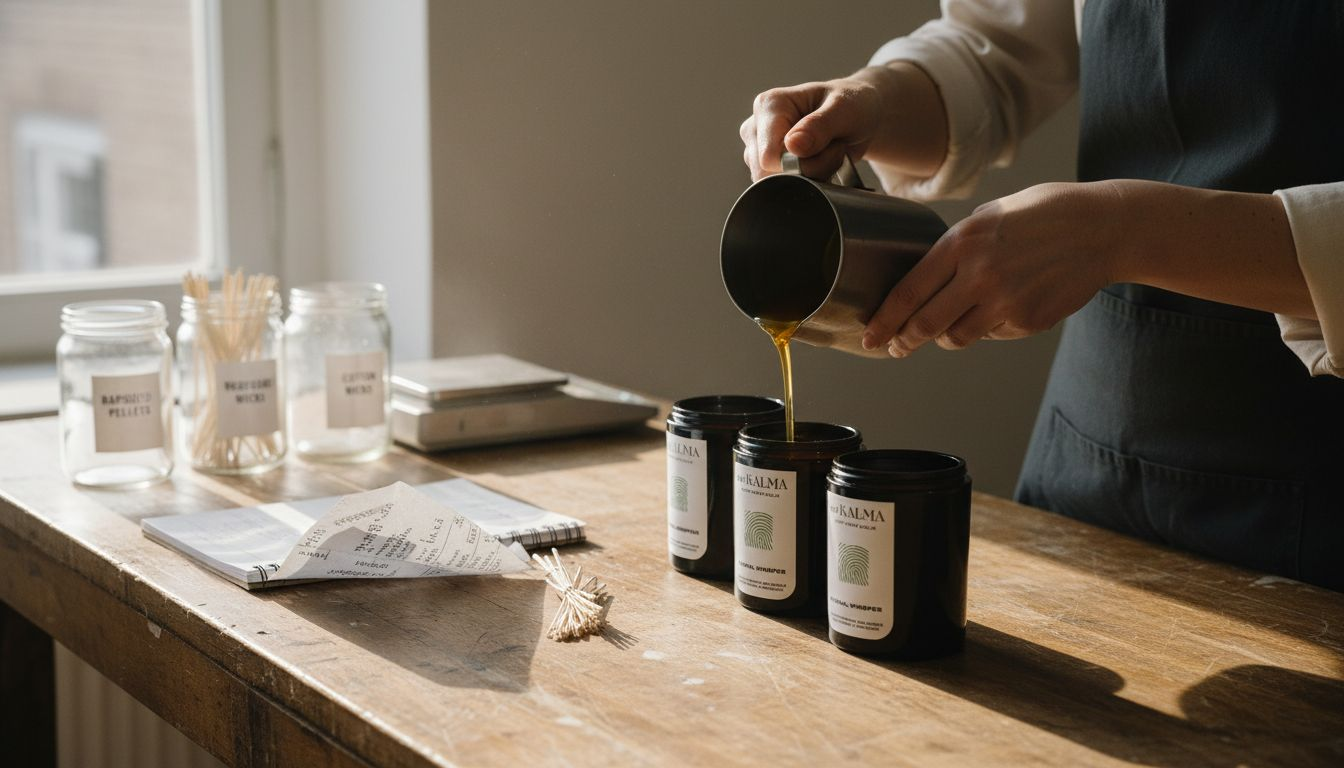
Cruelty-free candles require transparency at every sourcing stage. This means knowing where materials originate, how they’re processed, and whether suppliers meet established ethical standards.
Natural Wax Sources
Wax selection determines both quality and ethics. mi KALMA uses 100% European rapeseed wax, a renewable crop harvested locally with minimal environmental impact.
Key sourcing considerations include:
- Geographic origin that minimizes transport emissions
- Harvesting practices that avoid habitat destruction
- Processing methods that don’t require animal testing
- Supplier transparency allowing full ingredient traceability
- Certification documentation verifying cruelty-free status
Rapeseed wax meets all these criteria while delivering superior burn performance compared to imported alternatives.
Fragrance Oil Standards
Fragrance represents the most complex ingredient category. mi KALMA sources vegan, phthalate-free fragrance oils designed and produced in France specifically optimized for candle performance.
Ethical fragrance sourcing requires:
- IFRA compliance (International Fragrance Association standards)
- Verified absence of paraben and phthalate compounds
- No animal testing during development or production
- Transparent ingredient disclosure from suppliers
- Performance testing without animal harm
This contrasts sharply with mass-produced candles often containing synthetic fragrances with undisclosed sourcing or testing histories.
Wick Materials and Safety
Wicks deserve equal attention. Sustainable, cruelty-free candles use natural fiber wicks (typically cotton or wood-based) without lead cores or harmful coatings.
Supply Chain Transparency
True ethical sourcing goes beyond individual ingredients. Ethical sourcing practices require comprehensive supplier evaluation, documented sourcing controls, and verifiable compliance with animal welfare and environmental standards.
mi KALMA maintains direct relationships with European suppliers, enabling full transparency about material origins and production methods.
Ethical sourcing isn’t a checkbox—it’s an ongoing commitment to knowing exactly where every ingredient comes from and ensuring suppliers share your values around animal welfare and sustainability.
Pro tip: Request a candle maker’s sourcing documentation for their wax, fragrance oils, and wicks; brands committed to ethics will provide detailed supplier information and certifications rather than vague marketing claims.
Spotting Greenwashing and Avoiding Misleading Labels
Greenwashing—making products appear more ethical than they actually are—runs rampant in the candle industry. Vague claims like “natural,” “eco-friendly,” or “cruelty-free” sound good but often lack verification or specificity.
Learning to identify misleading marketing protects both your values and your wallet.
Red Flags in Labeling
Certain language patterns signal greenwashing. Watch for these warning signs:
- Vague terminology like “green,” “natural,” or “sustainable” without specific details
- Missing certifications from recognized third-party organizations
- Unsubstantiated claims about environmental or ethical benefits
- No sourcing information about where ingredients originate
- Absence of ingredient lists on packaging or websites
- Generic statements that apply to many competitors without differentiation
Legitimate cruelty-free brands provide specific, verifiable information about their practices.
The Certification Question
New regulations targeting sustainability labels now require brands to back claims with official certifications from recognized authorities. Generic eco-claims without documented certification have become legally questionable in many markets.
mi KALMA’s transparency extends beyond marketing language. Every ingredient sourcing claim references actual suppliers, processing methods, and standards met. This accountability distinguishes genuine ethical commitment from performative gestures.
The table below summarizes key certifications and what they verify for candle buyers:
| Certification | Verifies Cruelty-Free | Verifies Vegan | Verifies Sustainability |
|---|---|---|---|
| Leaping Bunny | Yes | Sometimes | No |
| Vegan Society | No | Yes | No |
| Ecocert | Sometimes | Sometimes | Yes |
| PETA Beauty Without Bunnies | Yes | Yes | No |
| FSC (for packaging) | No | No | Yes |
Questions to Ask Brands
Put candle makers to the test. Request answers to these specific questions:
- What certifications verify your cruelty-free status?
- Which suppliers source your wax, and where are they located?
- How are fragrance oils tested without animal harm?
- Can you provide documentation of your sourcing practices?
- What third-party organizations verify your claims?
Brands confident in their ethics welcome detailed scrutiny. Those dodging questions likely have something to hide.
Transparency as the Standard
Consumers rightfully demand scrutiny of vague or unverified sustainability claims. Genuine cruelty-free brands recognize this and provide specifics rather than slogans.
Look for brands that openly discuss their limitations, acknowledge ongoing challenges, and demonstrate measurable commitment rather than perfect claims.
True cruelty-free candles come from brands willing to show their work—suppliers, sourcing practices, testing methods, and certifications—not from those hiding behind marketing language.
Pro tip: Visit a brand’s website and look for sourcing documentation, ingredient transparency, and third-party certifications; if you can’t find this information within two minutes of searching, the brand likely lacks the transparency that defines genuine ethical practice.
Comparing Cruelty-Free With Conventional Candles
The difference between cruelty-free and conventional candles extends far beyond ethics. It affects indoor air quality, burn performance, and overall safety in your home.
Understanding these distinctions helps you make choices aligned with both your values and health.
Wax and Emissions
Conventional candles rely heavily on paraffin wax, a petroleum byproduct. When burned, paraffin releases significantly more harmful compounds than plant-based alternatives.
Paraffin candles emit substantially higher levels of volatile organic compounds (VOCs) and particulate matter compared to soy or rapeseed alternatives. These emissions accumulate in indoor spaces, potentially affecting respiratory health over time.
Cruelty-free candles using natural plant waxes burn cleaner, releasing fewer toxins into your home while delivering superior scent throw.
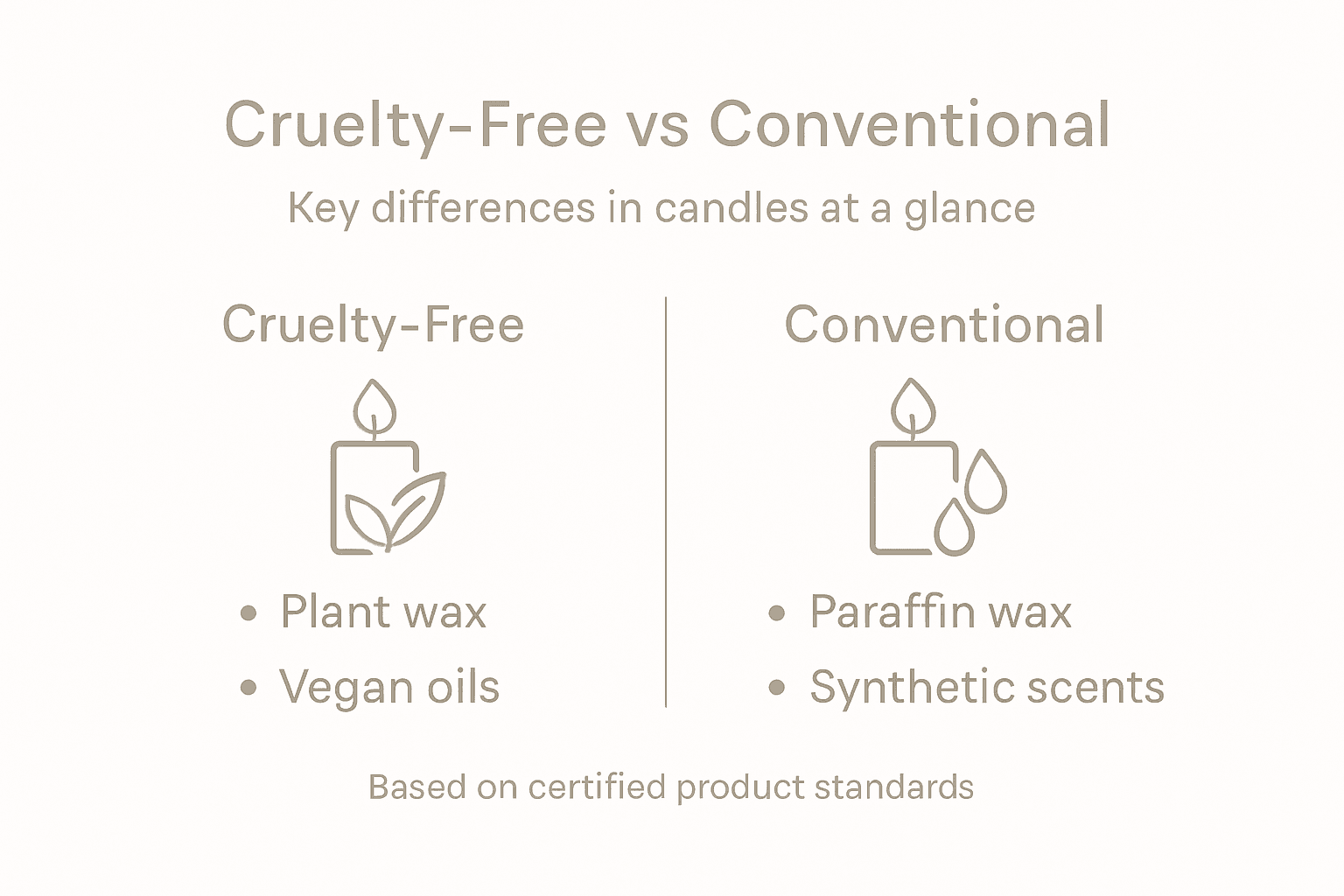
Here’s how cruelty-free and conventional candles differ across key factors:
| Aspect | Cruelty-Free Candle | Conventional Candle |
|---|---|---|
| Wax Source | Plant-based (e.g., rapeseed) | Petroleum (paraffin) |
| Animal Testing | Not used at any stage | Common in fragrance development |
| Burn Emissions | Minimal toxins and soot | More VOCs and soot produced |
| Ingredient Disclosure | Transparent and detailed | Often limited or unclear |
| Scent Quality | Stable, clean release | Can be overpowering or uneven |
| Environmental Impact | Lower carbon footprint | Higher environmental cost |
Fragrance Sourcing and Safety
Conventional candles often contain synthetic fragrances developed and tested using methods that involve animal harm. These mass-produced fragrances prioritize cost over safety.
Cruelty-free candles use phthalate-free, vegan fragrance oils designed specifically for candle performance. These avoid harmful plasticizers linked to health concerns in conventional candles.
Burn Quality and Performance
Here’s where ethics and quality align perfectly:
- Cruelty-free: Longer burn times, consistent scent throw, minimal soot
- Conventional: Shorter burn duration, uneven flames, black residue buildup
- Cruelty-free: Lower melting points allow precise scent release
- Conventional: Require higher temperatures, increasing emissions
mi KALMA’s rapeseed wax provides the cleanest, longest, and most stable burn available—all without animal harm.
Environmental Impact
Conventional paraffin production relies on petroleum extraction and refining, contributing to carbon emissions and environmental degradation. Cruelty-free plant-based candles use renewable crops with lower ecological footprints.
Research from the National Candle Association demonstrates that natural plant waxes significantly outperform paraffin in sustainability metrics across production, burning, and disposal.
The Hidden Costs of Cheap Candles
Conventional mass-produced candles appear affordable upfront but cost more over time. They burn faster, require more frequent replacement, and potentially create hidden health expenses.
Premium cruelty-free candles last longer and burn cleaner, making them more economical and healthier long-term investments.
Choosing cruelty-free isn’t a compromise between ethics and quality—it’s choosing the option that wins on both fronts: better for animals, better for your home, and better for your health.
Pro tip: Compare burn time per dollar spent, not just upfront price; a premium cruelty-free candle burning 40+ hours outperforms a conventional candle lasting 15 hours, making it the smarter financial and ethical choice.
Discover True Cruelty-Free Luxury with mi KALMA
Navigating the confusing world of cruelty-free candles can be overwhelming. With so many vague claims and greenwashing, finding a candle that genuinely aligns with your commitment to ethical beauty matters. If you value transparency, sustainable sourcing, and animal-friendly production, mi KALMA offers a sophisticated solution. Our handcrafted candles use European rapeseed wax and vegan, phthalate-free fragrance oils to ensure each burn honors your values without compromise.
Experience the calming power of ethically made candles by exploring our Candle Collection – mi KALMA and accessorize with care through our Candle Accessories – mi KALMA. Visit https://mikalma.com now to choose artisan candles that blend premium quality with cruelty-free integrity. Take the step today to enhance your space with meaningful light and scent crafted for mindful living.
Frequently Asked Questions
What defines a cruelty-free candle?
A cruelty-free candle is made without animal testing or harm at any stage of production. This includes the wax, fragrance oils, and colorants used in the candle.
Are all natural candles automatically cruelty-free?
No, natural candles are not automatically cruelty-free. For example, beeswax is natural but can involve exploitative beekeeping practices. It’s essential to consider how materials are sourced and tested.
How can I spot misleading claims about cruelty-free candles?
Watch for vague terms like “natural” or “eco-friendly” without specific details. Look for missing certifications from recognized organizations and ask brands about their sourcing and testing practices.
How do cruelty-free candles compare to conventional candles in terms of safety and emissions?
Cruelty-free candles typically use plant-based waxes that burn cleaner, emitting fewer toxins compared to conventional paraffin candles, which release higher levels of harmful compounds and VOCs.