

How to Personalize Candle Scents Naturally for Wellness
Sourcing truly clean candle materials can feel confusing when every label claims to be green. For wellness-focused Europeans who want more than just buzzwords, creating personalized candles begins with natural waxes and fragrances that align with ecological values. This guide highlights how to find sustainable waxes, pure scents, and earth-friendly accessories so your rituals and gifts reflect both your style and your commitment to the planet.
Step 1: Gather eco-friendly candle materials and scent options
Gathering the right materials is your foundation for creating personalized candles that align with your wellness values. You’ll want to source natural waxes, clean fragrance options, and eco-friendly accessories that work together to deliver a pure, long-lasting burn.
Start by selecting your wax base. European-sourced rapeseed wax offers a renewable alternative with superior scent performance and a cleaner burn compared to petroleum-based paraffin. If you prefer alternatives, beeswax, soy, and coconut wax are all renewable resources worth considering. Each has different burn characteristics, so your choice depends on whether you prioritize scent throw, burn time, or environmental footprint.
For fragrance, you have two paths forward:
- Essential oils for pure aromatherapy benefits and transparent ingredient sourcing
- Natural fragrance oils that are vegan, phthalate-free, and IFRA-compliant for safety and performance
Essential oils work beautifully for wellness-focused blends, though they require careful measuring. Natural fragrance oils designed specifically for candles deliver consistent room-filling scent without synthetic chemicals. Look for oils produced in Europe that prioritize transparency about what goes into your blend.
Next, gather your supporting materials. Cotton or wood wicks burn cleaner than synthetic alternatives and align with sustainable practices. Organic dyes or no dyes at all preserve the integrity of your natural fragrance. You’ll also want containers that reflect your values—recyclable glass or sustainable packaging matters when you’re creating mindful rituals.
Here’s a quick comparison of popular eco-friendly candle wax options:
| Wax Type | Environmental Impact | Scent Performance | Burn Time |
|---|---|---|---|
| Rapeseed Wax | Very low carbon footprint | Excellent scent throw | Medium to long |
| Soy Wax | Renewable, widely available | Good scent retention | Long |
| Beeswax | Naturally produced, supports bees | Subtle, natural scent | Longest |
| Coconut Wax | Sustainable crop, biodegradable | Strong, creamy fragrance | Medium |
Source your materials from suppliers who share your commitment to transparency and sustainability, not just eco-friendly labels.
Check that your fragrance supplier provides clear guidance on scent selection, as this prevents costly mistakes when blending personalized scents. Many small European producers offer sample sets so you can test compatibility before committing to full batches.
Pro tip: Order materials in small quantities first—test how different wax and fragrance combinations perform in your specific space before scaling up to full batches.
Step 2: Select fragrance blends for personalization
Choosing your fragrance blend is where personalization truly begins. This step transforms your candle from a simple home accent into a wellness ritual tailored to your specific needs and mood.
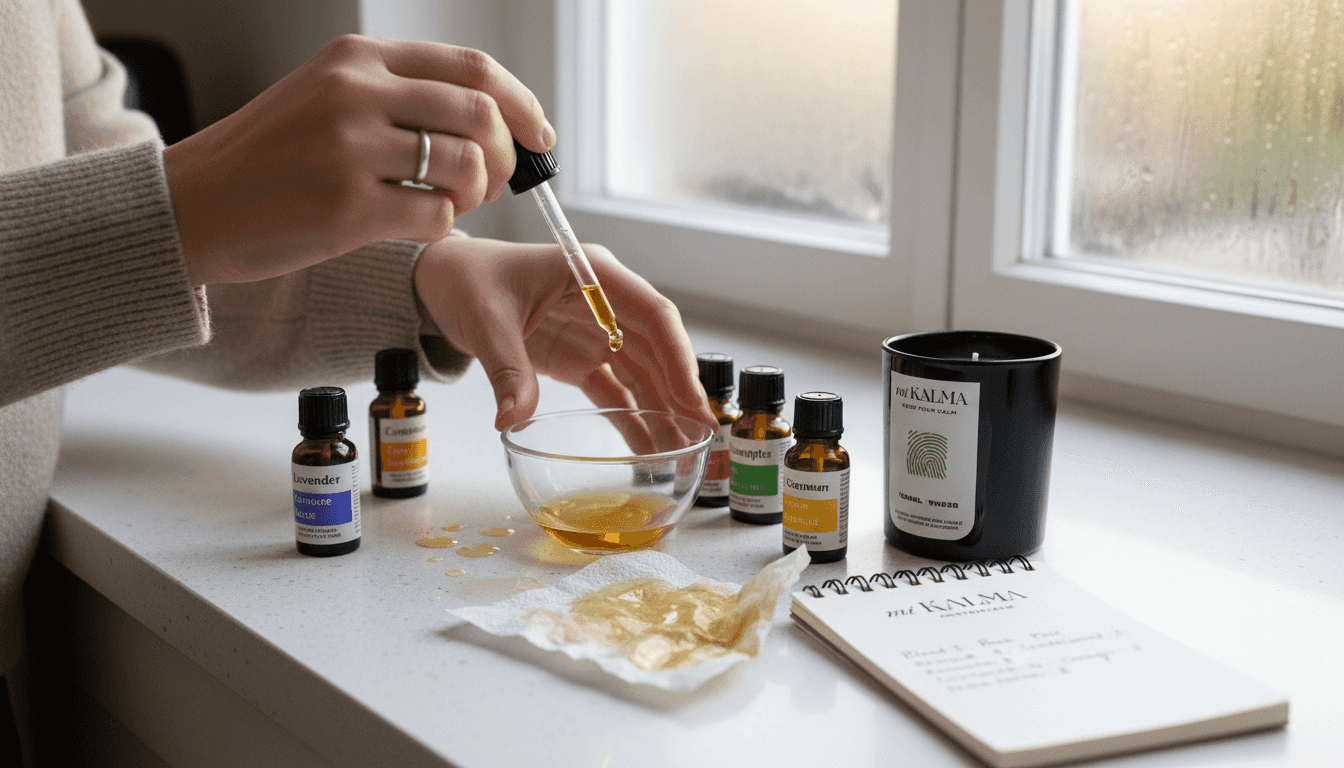
Start by identifying your wellness intention. Are you seeking relaxation and calm, energy and focus, or emotional balance? Your intention guides which oils to prioritize. Lavender delivers relaxation benefits, making it ideal for evening rituals and stress relief. Eucalyptus supports respiratory wellness and mental clarity, while citrus oils uplift mood and energize your space.
Build your blend by selecting complementary oils that work together. Consider these combinations:
- Lavender and chamomile for deep relaxation
- Eucalyptus and peppermint for focus and clarity
- Orange and vanilla for warmth and comfort
- Lemon and lavender for balanced uplifting calm
When blending essential oils, start small. Mix your chosen oils in a test carrier first before adding them to melted wax. A ratio of 3 to 5 percent fragrance oil per candle weight is standard, though natural essential oils may require different measurements due to their potency.
For easy reference, here are common fragrance blends and their main benefits:
| Blend | Primary Benefit | Suggested Use Time |
|---|---|---|
| Lavender & Chamomile | Promotes deep relaxation | Evening, pre-sleep |
| Eucalyptus & Peppermint | Enhances focus and clarity | Morning or work sessions |
| Orange & Vanilla | Creates warmth and comfort | Anytime, cozy atmosphere |
| Lemon & Lavender | Balances mood, uplifting | Daytime, stress relief |
Remember that scent influences your home environment on an emotional and sensory level. Your personal blend should feel authentic to what wellness means for you, not what trends suggest.
Trust your instincts when blending—the scent you’re drawn to is often the one your body and mind need most.
Test your blend in a small batch before committing to larger quantities. Your candle’s final scent may develop subtly as the wax cools and cures, so give it 24 to 48 hours to fully mature before deciding if adjustments are needed.
Pro tip: Keep detailed notes on your oil ratios and combinations so you can recreate winning blends and learn what works best for your space and personal wellness goals.
Step 3: Infuse scents into rapeseed wax batches
Infusing fragrance into your rapeseed wax is where science meets creativity. This step determines how effectively your scent develops and performs throughout your candle’s burn life.
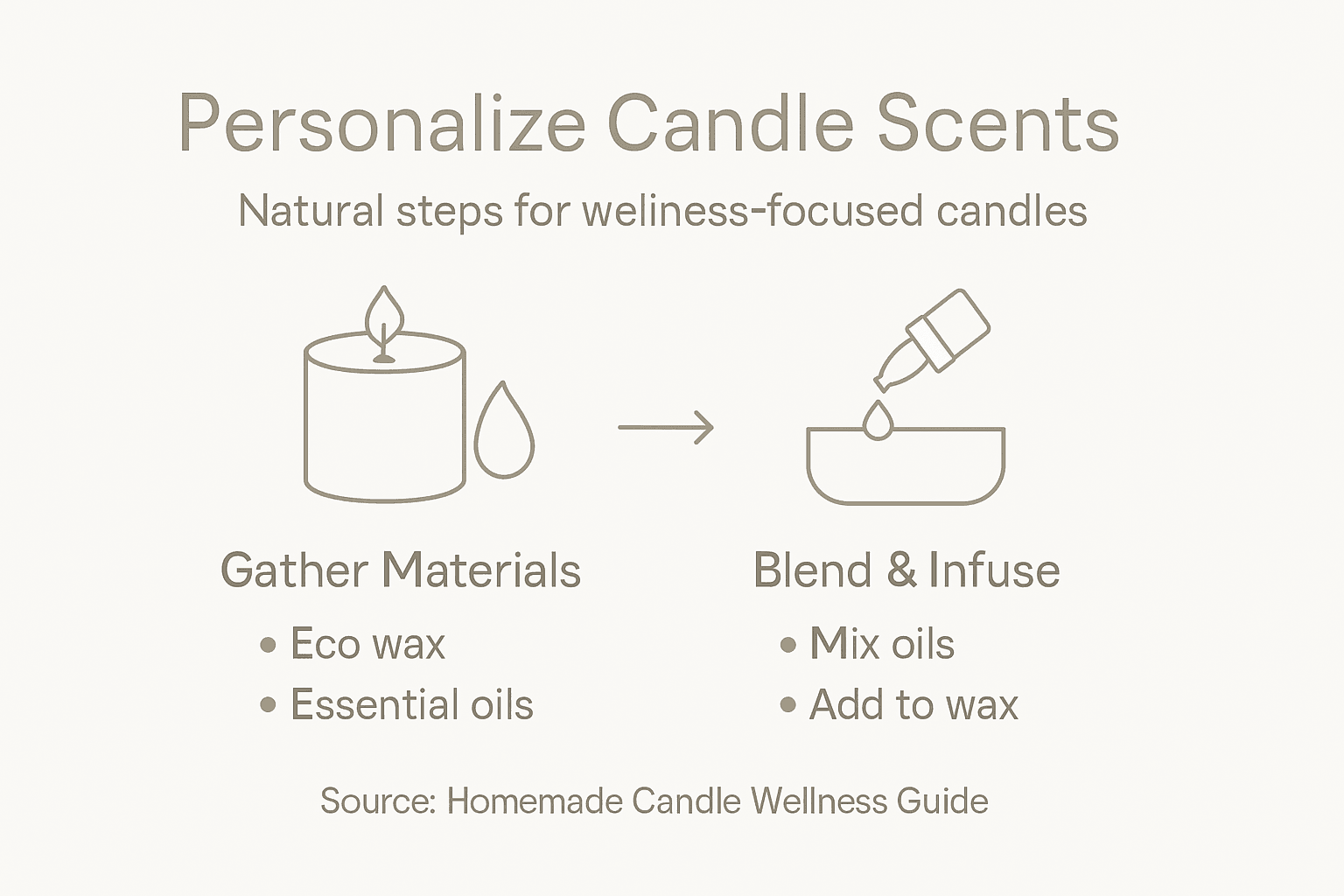
Begin by heating your rapeseed wax to the correct temperature. Temperature control between 60-70°C is critical for preserving fragrance integrity and maximizing scent throw. A reliable thermometer keeps you in the safe zone where oils maintain their aromatic potential without degrading from excessive heat.
Once your wax reaches the target temperature, remove it from the heat source. Add your pre-measured fragrance oils or essential oils slowly and deliberately. This controlled approach prevents temperature spikes that could compromise scent quality.
Stir thoroughly but gently to distribute the fragrance evenly:
- Use a heat-resistant utensil to mix
- Stir in slow, deliberate motions for 2 to 3 minutes
- Ensure no pockets of concentrated scent remain
- Watch for uniform color and consistency throughout
Proper mixing prevents hot spots where fragrance concentrates unevenly. Your goal is complete, homogeneous distribution so every part of your candle delivers consistent scent when lit.
Allow the infused wax to cool slightly before pouring into containers. This brief rest period helps the fragrance fully integrate into the wax matrix, strengthening the bond between scent and base material.
Patience during cooling transforms fragrance from simply added oils into truly infused wellness experience.
The entire infusion process typically takes 5 to 10 minutes from heating to pouring readiness. Avoid rushing this step, as hurried mixing or improper temperatures are the most common reasons for weak or inconsistent scent performance in finished candles.
Pro tip: Keep your thermometer visible throughout the heating and cooling process—consistent temperature management is the single most important factor in creating candles with strong, lasting scent throw.
Step 4: Test scent strength and adjust as needed
Testing your candle’s scent strength ensures you’ve achieved the perfect balance between fragrance intensity and wellness benefits. This critical step reveals whether your personalized blend performs as intended.
Start with a cold throw test before burning your candle. Smell the cooled wax at room temperature to evaluate the scent’s initial presence. A strong cold throw indicates good fragrance distribution and oil integration.
Next, allow your finished candle to cure for up to two weeks before performing a full burn test. This waiting period lets the fragrance fully meld with the wax, developing its complete aromatic profile. Patience here makes the difference between a good candle and an exceptional one.
When you’re ready to test, light your candle and assess these elements:
- Hot throw in the first 15 to 30 minutes after lighting
- Scent intensity across different room sizes
- Whether the aroma feels natural or overpowering
- How the fragrance evolves as the candle burns
If the scent feels too weak, small adjustments to fragrance oil load can improve performance without compromising burn quality. Increase your fragrance concentration by 0.5 to 1 percent increments in your next batch, then test again.
Conversely, if your candle feels overwhelming, reduce the fragrance load slightly. The goal is a natural, balanced scent that enhances your space without dominating it or triggering sensory fatigue.
Your nose is the best measuring tool—trust what you experience, not what you think should work.
Document your findings in detail. Note the exact fragrance ratios, curing time, room size, and your honest assessment of scent performance. This creates a personalized reference guide for future batches.
Pro tip: Test your candle in the actual room where you’ll use it most, as room size, ventilation, and existing scents dramatically affect how your candle’s fragrance performs in real life.
Step 5: Package personalized candles for gifting or use
Packaging your personalized candle transforms it from a wellness product into a thoughtful gift or cherished personal ritual. This final step reflects your commitment to sustainability and intentionality.
Choose sustainable packaging materials that align with your eco-friendly values. Recyclable kraft paper boxes, glass jars, and minimal plastic protect your candle while reducing environmental impact. These materials feel premium and reinforce the natural, wellness-focused nature of your creation.
If you’re printing labels, use recycled paper with soy-based inks. This detail matters because it extends your sustainability commitment right through to the packaging. Your label should include the candle’s scent profile, any ingredients, and burning instructions for safety and clarity.
Personalize your packaging with thoughtful touches:
- Handwritten notes describing the scent’s wellness benefits
- Natural decorative elements like twine or dried flowers
- A card explaining your fragrance blend’s purpose
- Instructions on optimal burn time and safety
These additions transform your candle into a mindful gift that tells a story. Recipients understand the intention behind your creation and feel the care you invested in every layer.
Packaging is the first experience your candle creates, so make it intentional and reflective of your wellness values.
For personal use, consider keeping your candle in its original container or transferring it to a reusable vessel you love. The ritual of lighting your personalized candle becomes even more meaningful when the presentation matches the experience you’ve crafted.
When gifting, include a brief note about the scent’s origin and why you selected that particular blend for that person. This context deepens the recipient’s connection to your gift and invites them into your wellness journey.
Pro tip: Store your finished candles in a cool, dark place until gifting or use, as this preserves fragrance integrity and prevents discoloration from light exposure.
Elevate Your Wellness Journey with Personalized, Eco-Friendly Candles
Crafting your own natural candle scents for wellness can be deeply rewarding yet challenging when it comes to selecting the right blend and materials that truly support calmness and reflection. If you value clean, sustainable ingredients like European rapeseed wax and crave fragrances that enhance your mindfulness rather than overpower it this is where our Candle Collection – mi KALMA shines.
Discover handcrafted candles made in small batches in Amsterdam with a commitment to eco-conscious and cruelty-free practices. Each candle is designed as a personal token to promote tranquility and connection through beautifully balanced scent profiles. Visit mi KALMA now to explore unique scents and artisanal accessories that reflect your wellness values. Start transforming your space today and enjoy the full sensory benefits of thoughtful, natural candle making.
Frequently Asked Questions
How can I choose the right natural wax for my candles?
Choosing the right natural wax involves considering its burn characteristics and scent performance. For a cleaner burn and good scent throw, consider European-sourced Rapeseed Wax, Beeswax, Soy Wax, or Coconut Wax. Test different options to find what aligns with your wellness goals.
What are some good essential oil blends for relaxation in homemade candles?
Some effective essential oil blends for relaxation include Lavender and Chamomile, which promote deep relaxation. You can mix equal parts of these oils to create a calming, soothing blend for evening rituals.
How do I measure fragrance oils correctly for my candle batches?
To measure fragrance oils, aim for a loading percentage of 3 to 5 percent of the candle weight. For example, if your candle weighs 10 ounces, use approximately 0.3 to 0.5 ounces of fragrance oil for optimal scent performance.
What steps should I follow to test my candle’s scent strength?
Start by performing a cold throw test, smelling the cooled wax to gauge scent presence. After allowing the candle to cure for up to two weeks, light it to evaluate the hot throw and overall scent intensity. Adjust fragrance ratios as needed based on your observations.
How can I package my homemade candles sustainably for gifting?
Package your homemade candles in recyclable materials like kraft paper boxes or glass jars, and consider using recycled paper for labels. Personalize with handwritten notes or decorative elements, ensuring your packaging aligns with your eco-friendly values.
What is the ideal temperature for infusing scent into rapeseed wax?
The ideal temperature for infusing scent into Rapeseed Wax is between 60-70°C. Use a reliable thermometer to maintain this temperature while adding fragrances to preserve their aromatic qualities.