

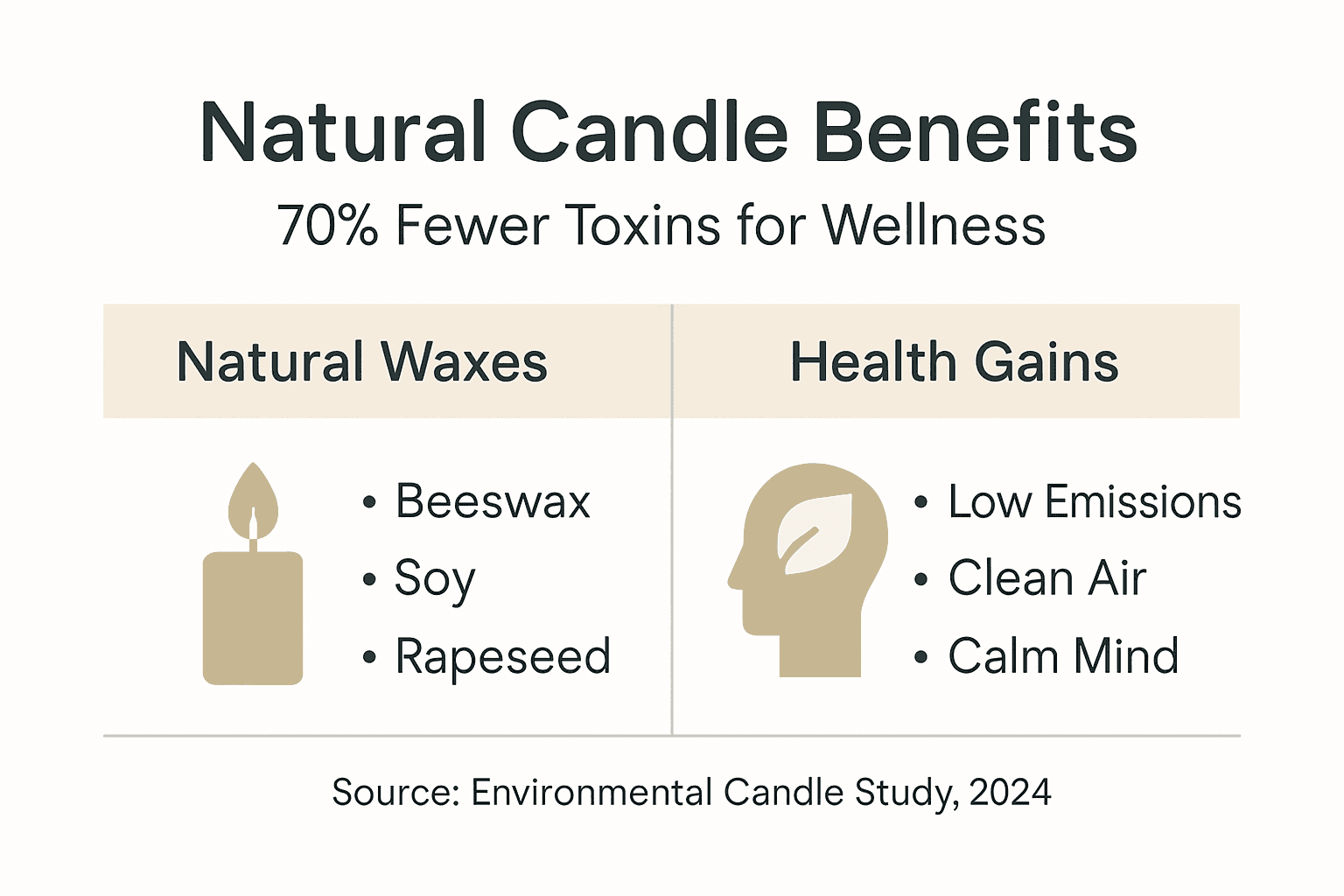
Natural candles cut 70% toxic emissions for wellness
You’ve likely seen labels touting ‘natural’ candles, but not all plant-based waxes deliver equal health or environmental benefits. Many contain hidden paraffin or synthetic fragrances that undermine wellness goals. This guide reveals the crucial differences in ingredients, craftsmanship, and sustainability so you can confidently choose candles that truly support your mindfulness practices and eco values.
Key takeaways
| Point | Details |
|---|---|
| Plant-based wax types | Natural candles use rapeseed, soy, or beeswax instead of petroleum paraffin, offering cleaner burns. |
| Emission reduction | Natural wax candles reduce harmful VOC emissions by over 70% compared to paraffin, improving indoor air quality. |
| Misleading claims | Not all ‘natural’ labels guarantee purity; certifications and transparent ingredients are essential. |
| Artisanal advantages | Small-batch candles with essential oils deliver superior fragrance layering and mindfulness benefits. |
| Smart selection criteria | Look for European rapeseed wax, cotton wicks, and verified natural fragrances for authentic wellness support. |
Understanding natural candle ingredients
Natural candles primarily use plant-derived waxes: rapeseed, soy, and beeswax. These materials differ fundamentally from paraffin, a petroleum byproduct that releases more pollutants when burned. Rapeseed wax is composed of triglycerides primarily C18 fatty acids and has a higher melting point than soy wax and paraffin, ranging from 56 to 62°C compared to soy’s 48 to 52°C.
This higher melting point translates to slower, more even burning and longer candle life. Soy wax melts faster, which can affect burn quality and scent throw. Beeswax sits between these extremes but requires more processing and raises ethical questions for vegan consumers.
Wax comparison:
| Wax Type | Melting Point | Source | Carbon Footprint |
|---|---|---|---|
| Rapeseed | 56-62°C | European farms | Low (local sourcing) |
| Soy | 48-52°C | Global imports | Medium (long transport) |
| Beeswax | 62-64°C | Apiaries | Medium (animal product) |
| Paraffin | 46-69°C | Petroleum | High (fossil fuel) |
Ingredient transparency matters because many brands blend small amounts of natural wax with paraffin to cut costs while maintaining ‘natural’ marketing. European rapeseed wax supports local sustainable agriculture, reducing transport emissions and water use compared to imported alternatives.
Key ingredient benefits:
- Renewable plant sources regenerate annually unlike fossil fuels
- Biodegradable formulas break down naturally without soil contamination
- Non-toxic composition eliminates petroleum-derived chemicals
- Sustainable farming practices protect local ecosystems
Pro Tip: Always check the full ingredient list rather than relying on front-label claims. Look for 100% natural candle wax with no paraffin blends.
Environmental and health benefits of natural candles
Natural wax candles produce significantly fewer volatile organic compounds than paraffin versions. Paraffin candles emit over 100 toxic VOCs including toluene and benzene, known respiratory irritants and potential carcinogens. Studies show natural wax candles reduce these harmful emissions by more than 70%, dramatically improving indoor air quality.
This emission reduction matters especially in closed European homes during winter months when ventilation decreases. Cleaner burning protects respiratory health and creates safer environments for meditation and wellness practices. Cotton or wooden wicks burn even cleaner with minimal soot compared to metal-core wicks that can release heavy metals.
Health and environmental advantages:
- Reduced respiratory irritation from fewer airborne toxins
- Lower asthma and allergy triggers in sensitive individuals
- Decreased black soot deposits on walls and ceilings
- Minimal indoor air pollution during extended burning sessions
- Smaller carbon footprint from renewable agricultural sources
European rapeseed wax offers particular sustainability advantages. Local cultivation requires less irrigation than soy and eliminates transcontinental shipping emissions. The crop rotation systems used in European farming also improve soil health and biodiversity.
| Emission Type | Paraffin Candles | Natural Wax Candles | Reduction |
|---|---|---|---|
| Total VOCs | High (100+ compounds) | Low (30 compounds) | 70%+ |
| Particulate matter | Significant black soot | Minimal residue | 85% |
| Benzene/Toluene | Present | Absent/trace | 95%+ |
| Carbon footprint | High (petroleum) | Low (renewable) | 60% |
Switching to sustainable candles transforms your home into a healthier sanctuary while supporting environmental stewardship.
Pro Tip: Burn natural candles in smaller rooms first to experience the air quality difference. You’ll notice less throat irritation and clearer breathing compared to conventional candles.
Common misconceptions about natural candles
Many consumers assume soy wax always represents the most sustainable choice, but European rapeseed wax actually delivers lower transport emissions and water requirements. Soy production often involves deforestation in South America and long-distance shipping to Europe, increasing its environmental cost. Local rapeseed supports regional farmers and reduces supply chain impacts.
Another widespread myth suggests that all candles labeled ‘natural’ exclude paraffin and synthetic fragrances. Without proper certification or transparent ingredient lists, brands can use these terms loosely. Some products contain only 10% natural wax yet market themselves as natural candles.
Common myths debunked:
- Soy wax is always greener than rapeseed wax (false for European consumers due to transport)
- Natural labels guarantee 100% plant-based ingredients (requires verification)
- Synthetic fragrances last longer than essential oils (both provide adequate longevity)
- All natural candles cost significantly more (price varies by brand, not wax type)
- Paraffin-free automatically means healthy (synthetic fragrances still pose risks)
The misconception that synthetic fragrances offer superior performance or safety lacks scientific support. Natural essential oils provide comparable scent throw and longevity while delivering aromatherapeutic benefits synthetic versions cannot match. Essential oil-based fragrances support wellness practices through genuine botanical compounds.
Understanding these misconceptions empowers you to look beyond marketing claims. Check for certifications like COSMOS or Ecocert that verify natural and organic ingredients. Read full ingredient disclosures rather than trusting vague ‘natural’ or ‘eco-friendly’ labels without substantiation.
Pro Tip: If a brand doesn’t clearly list its wax source and fragrance ingredients, contact them directly. Transparent companies readily share this information; evasive responses signal potential greenwashing.
Sensory experience and craftsmanship in natural candles
The fragrance source fundamentally shapes candle quality and wellness benefits. Natural essential oils extracted from plants offer complex, layered scents that evolve as the candle burns. Synthetic fragrances create flat, unchanging scent profiles that can trigger headaches or allergic reactions in sensitive individuals.

Small-batch handcrafted production enables quality control impossible in mass manufacturing. Artisans adjust wick size, wax temperature, and fragrance ratios for each batch, ensuring optimal burn characteristics. This attention to detail produces candles that burn evenly without tunneling or excessive smoking.
Artisanal quality factors:
- Hand-poured batches allow precise temperature control for better wax-fragrance binding
- Individual wick testing ensures clean burning specific to each vessel size
- Fresh ingredient sourcing maintains essential oil potency and aroma quality
- Quality inspection catches imperfections before products reach customers
- Seasonal adjustments account for humidity and temperature variations
Local ingredient sourcing creates candles connected to European terroir. Rapeseed grown in Dutch or French fields carries subtle regional characteristics just as wine grapes do. This connection to place enhances the mindfulness aspect valued by conscious consumers seeking authentic sensory experiences.
The sensory richness of natural candle scents supports meditation and wellness practices. Pure lavender essential oil calms the nervous system more effectively than synthetic lavender fragrance because it contains the full spectrum of botanical compounds. Your body recognizes and responds to these natural molecules.
Pro Tip: Notice how natural candles smell different throughout their burn time. This evolution reflects the complex essential oil composition, unlike synthetic fragrances that smell identical from first light to final burn.
Choosing the right natural candle for wellness and mindfulness
Selecting quality natural candles requires evaluating multiple factors beyond attractive packaging. Start with wax verification: confirm the candle uses 100% plant-based wax without paraffin blends. European rapeseed wax offers the lowest environmental impact for consumers in this region.
Selection checklist:
- Verify certifications (COSMOS, Ecocert, or equivalent organic standards)
- Confirm 100% natural wax with no paraffin or petroleum additives
- Check for cotton or wooden wicks instead of metal-core varieties
- Ensure fragrances come from essential oils rather than synthetic compounds
- Look for transparent ingredient lists with botanical names
- Prefer local or European sourcing to minimize transport emissions
Wick material significantly impacts burn quality and health. Cotton wicks burn cleanly with minimal smoke, while wooden wicks create a pleasant crackling sound that enhances relaxation. Metal-core wicks can release lead or zinc particles into your air, undermining the health benefits of natural wax.
Step-by-step selection process:
- Research the brand’s sourcing practices and manufacturing location
- Read ingredient lists carefully for wax type and fragrance source
- Check for third-party certifications verifying natural and organic claims
- Consider vessel materials (glass and ceramic are most sustainable)
- Evaluate scent preferences based on your wellness goals (calming, energizing, focusing)
- Start with smaller sizes to test quality before committing to larger purchases
Artisanal, small-batch candles typically deliver superior quality because makers can maintain strict standards throughout production. These premium candles often cost slightly more but provide better value through longer burn times and more effective aromatherapy benefits.
Matching scent profiles to your intentions maximizes wellness benefits. Lavender and chamomile support evening relaxation, while citrus and peppermint enhance morning focus. Understanding these candle scents for relaxation helps you create intentional rituals.
Consider purchasing from brands that openly share their sustainable candle practices. Transparency about ingredient sourcing, manufacturing processes, and environmental commitments indicates genuine dedication to quality and ethics.
Summary: integrating knowledge to make confident candle choices
Natural plant-based waxes paired with clean-burning wicks dramatically reduce indoor toxins while minimizing environmental impact. The 70% reduction in harmful VOC emissions compared to paraffin candles creates healthier living spaces for you and your family. European rapeseed wax delivers particular advantages through local sourcing and lower resource requirements.
Beware of misleading ‘natural’ claims lacking certification or ingredient transparency. Brands committed to quality readily share detailed information about wax sources, fragrance ingredients, and manufacturing processes. This openness distinguishes authentic natural candles from greenwashed alternatives.
Key decision factors:
- Verified natural ingredients with certifications confirming purity standards
- Local European wax sources supporting sustainable regional agriculture
- Essential oil fragrances providing genuine aromatherapy benefits
- Artisanal craftsmanship ensuring quality control and optimal performance
- Transparent brands openly sharing sourcing and manufacturing details
Artisanal craftsmanship enhances both fragrance complexity and mindful experiences. Small-batch production allows the attention to detail necessary for premium candles that truly support wellness goals. Hand-poured candles with carefully selected essential oils create rituals that nourish mind and spirit.
Selecting verified natural candles aligns your purchasing decisions with personal wellness aspirations and environmental values. Each candle choice becomes an opportunity to support sustainable farming, reduce pollution, and create healthier indoor environments. Mindful purchasing transforms routine consumption into meaningful action.
Experience premium natural candles for your wellness journey
Ready to transform your space with candles that honor both your wellbeing and the planet? mi KALMA offers luxury natural candles handcrafted with European rapeseed wax and pure essential oils. Each small-batch creation supports sustainable Dutch farming while delivering the clean-burning, aromatherapeutic experience you deserve.
Our transparent ingredient sourcing means you know exactly what you’re bringing into your home. From calming lavender to energizing citrus blends, every scent supports specific wellness intentions. Explore how premium candles enhance wellness rituals and discover the benefits of premium handcrafted candles made with care in Amsterdam. Visit mi KALMA to find your perfect companion for mindful moments.
Frequently asked questions
What makes rapeseed wax more sustainable than soy wax in Europe?
European rapeseed wax requires minimal transport from local farms, reducing carbon emissions by up to 60% compared to imported soy. Rapeseed cultivation uses less water and fits into sustainable crop rotation systems that improve soil health. Local sourcing also supports regional farmers and eliminates deforestation concerns associated with some soy production.
How can I tell if a candle truly uses natural essential oils?
Check the ingredient list for specific botanical names like ‘Lavandula angustifolia’ rather than vague terms like ‘fragrance’ or ‘parfum.’ Natural essential oils cost more, so suspiciously cheap ‘natural’ candles likely contain synthetics. Reputable brands provide detailed ingredient transparency and often list the origin of their essential oils.
Are cotton wicks always better for health than metal-core wicks?
Cotton and wooden wicks burn cleanly without releasing heavy metals into your air. Metal-core wicks can contain lead or zinc that vaporizes during burning, creating respiratory risks. Always choose candles with cotton or wood wicks, especially if you burn them frequently or have respiratory sensitivities.
Do natural candles always cost more than synthetic ones?
Natural candles typically cost 20 to 40% more due to premium ingredients and small-batch production. However, they often burn longer and provide superior scent quality, improving value per hour of use. Mass-produced natural candles can match synthetic prices, but artisanal quality justifies the investment for wellness-focused consumers.
Can natural candles provide lasting fragrance without synthetic additives?
Absolutely. High-quality essential oils offer excellent scent throw and longevity when properly formulated. The key lies in correct wax-to-fragrance ratios and appropriate wick sizing. Many consumers find natural fragrances more satisfying because they evolve throughout the burn, unlike flat synthetic scents. Learn more about choosing scented candles that deliver lasting natural fragrance.