

Ways to use scented candles for wellness in 2026
Finding truly eco-friendly scented candles that support your wellness journey feels like searching for a needle in a haystack. Mass-produced options often contain synthetic fragrances and questionable waxes that undermine your health goals. This guide reveals practical, mindful ways to integrate sustainable scented candles into meditation, work, evening rituals, and social spaces while choosing products that align with your values.
Key takeaways
| Point | Details |
|---|---|
| Wax type matters | Natural waxes like rapeseed and soy burn cleaner and support sustainability compared to paraffin. |
| Scent drives benefits | Different aromatherapy profiles enhance meditation, focus, relaxation, or social connection. |
| Accessories boost performance | Wick trimmers and snuffers extend burn time, reduce soot, and preserve scent quality. |
| Ritual amplifies impact | Consistent mindful lighting practices deepen wellness benefits beyond passive candle use. |
| Safety is essential | Proper placement, trimming, and extinction prevent hazards while maximizing enjoyment. |
How to choose the right eco-friendly scented candle
Selecting the right candle starts with understanding what makes it genuinely eco-conscious. Natural waxes like rapeseed and soy produce fewer emissions than petroleum-based paraffin while supporting sustainable agriculture. These plant-based options burn cooler and longer, releasing fragrance gradually without overwhelming your space.
Scent selection drives your wellness outcomes. Lavender and chamomile calm the nervous system. Citrus notes like bergamot and lemon energize and sharpen focus. Sandalwood and cedarwood ground you during meditation. Match the aromatherapy profile to your specific wellness goal rather than choosing based on preference alone.
Burn time and scent throw determine value. A 200-gram candle should burn 40 to 50 hours. Scent throw refers to how far the fragrance travels. Cold throw is the scent when unlit. Hot throw is the fragrance strength during burning. Test both before committing to large purchases.
Wick configuration affects ambiance. Single-wick candles suit small rooms and personal rituals. Multi-wick formats distribute heat evenly in larger spaces, creating stronger scent diffusion and visual appeal. Consider your room size and intended use when selecting format.
Artisanal production matters. Small-batch candles from makers who source ingredients ethically and craft by hand typically deliver superior quality. They also support local economies and transparent supply chains. Check for certifications like vegan, cruelty-free, and sustainably sourced materials.
Key selection criteria include:
- Natural wax base free from synthetic additives
- Aromatherapy-grade essential oils or phthalate-free fragrances
- Cotton or wood wicks without metal cores
- Transparent ingredient sourcing and production methods
- Appropriate size and format for your intended space
For deeper guidance on choosing scented candles easily, explore comprehensive selection frameworks that match candle characteristics to wellness needs.
Use case 1: enhancing meditation with calming scents
Meditation practitioners know that environment shapes practice depth. Scented candles with calming aromatherapy profiles create sensory anchors that signal your brain to shift into relaxation mode. The ritual of lighting a candle becomes a mindfulness practice itself.
Sandalwood works particularly well because it activates the parasympathetic nervous system, which governs rest and recovery. This physiological response helps you settle into meditation faster. The warm, woody aroma also masks distracting environmental odors.
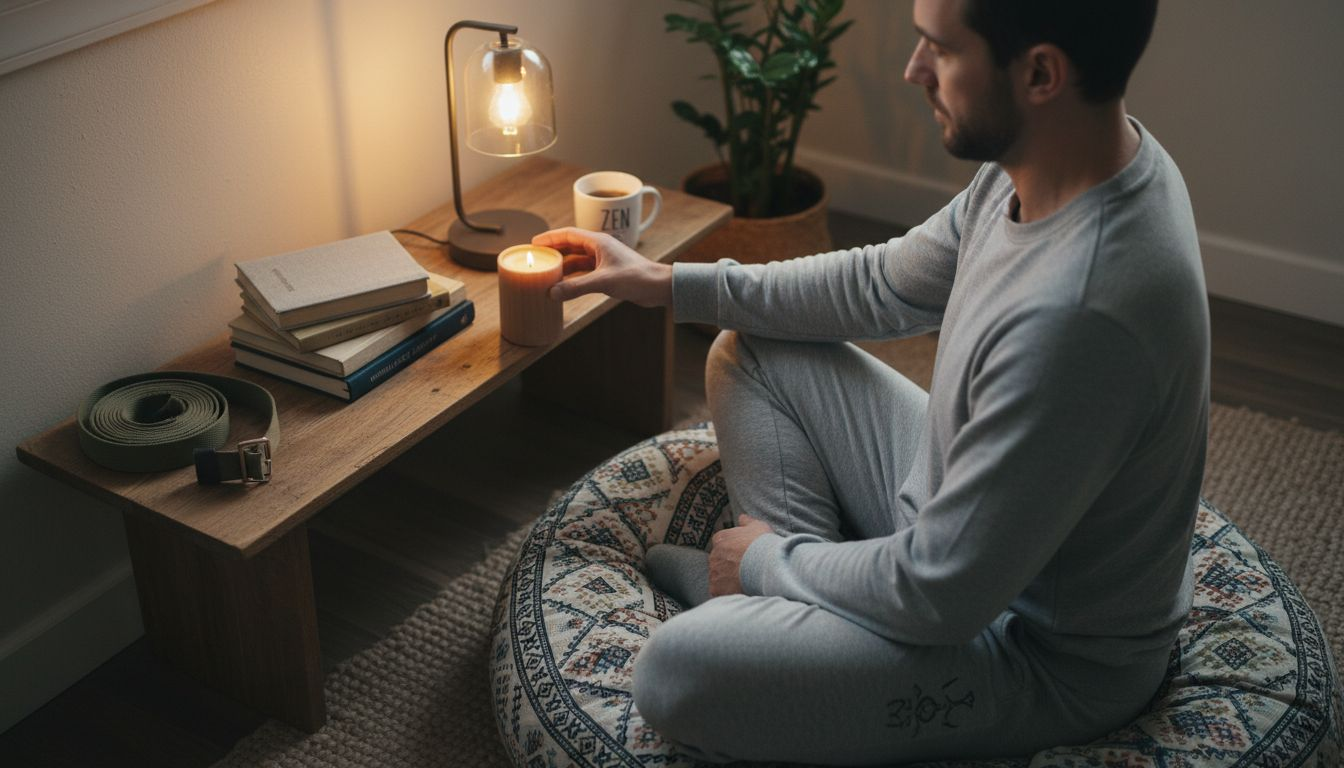
Lavender-scented candles improve relaxation and reduce anxiety symptoms in controlled trials. The compound linalool in lavender interacts with neurotransmitter systems to produce measurable calming effects. Even brief exposure before meditation primes your nervous system for deeper practice.
Placement affects meditation quality. Position your candle at eye level or slightly below, about three to five feet away. This distance provides gentle scent and soft visual focus without creating distraction. Avoid placing candles directly in your line of sight during closed-eye meditation.
Burn duration matters for meditation sessions. Light your candle 10 to 15 minutes before practice begins, allowing the scent to permeate your space. For 20 to 30-minute sessions, this timing creates optimal aromatic presence without overstimulation. Extinguish immediately after finishing to preserve wax and scent for future sessions.
Optimal meditation scents include:
- Lavender for anxiety reduction and nervous system calming
- Sandalwood for grounding and parasympathetic activation
- Frankincense for deepening breath awareness
- Chamomile for stress relief and emotional balance
Explore types of candle scents for mindful relaxation to understand how different aromatherapy profiles support specific meditation styles. You can also learn to personalize candle scents naturally by blending complementary fragrances.
Pro Tip: Pair your candle lighting with three deep breaths as a consistent pre-meditation ritual. This trains your nervous system to associate the scent and action with relaxation, deepening benefits over time.
Use case 2: boosting energy and focus during work or study
Productive work environments benefit from strategic sensory cues. Citrus-scented candles stimulate alertness and mood without the jittery effects of excessive caffeine. The bright, clean aroma helps maintain concentration during demanding cognitive tasks.
Citrus compounds like limonene interact with brain chemistry to promote wakefulness and positive affect. This makes lemon, bergamot, and grapefruit candles ideal for morning work sessions or afternoon slumps when energy naturally dips.
To safely incorporate scented candles into your workspace:
- Place the candle on a stable, heat-resistant surface at least 12 inches from papers, electronics, and other flammable materials.
- Position it slightly behind and to the side of your primary work area so the flame stays in peripheral vision rather than creating distraction.
- Choose multi-wick formats for home offices larger than 150 square feet to ensure even scent distribution without moving the candle frequently.
- Burn for 60 to 90-minute focused work blocks, then extinguish to preserve wax and prevent olfactory fatigue.
- Never leave candles burning when stepping away, even briefly.
Multi-wick candles offer advantages for workspaces. They create wider melt pools that release fragrance more consistently across larger rooms. The increased light output also enhances ambiance during darker months without harsh overhead lighting.
Safety becomes critical near electronics and documents. Always use a proper candle holder with a stable base. Keep wicks trimmed to prevent excessive flame height that could reach nearby items. Position candles where airflow from vents or windows won’t cause flickering.
Consider the comprehensive guide to choosing scented candles easily when selecting workspace candles. Understanding wick trimmers benefits ensures you maintain optimal flame height and scent quality throughout your workday.
Best focus-enhancing scents include peppermint for mental clarity, rosemary for memory retention, eucalyptus for alertness, and citrus blends for mood elevation.
Use case 3: creating relaxing evening routines
Evening wind-down rituals signal your body that sleep approaches. Scented candles with sedative aromatherapy profiles help transition from active day mode to restful evening state. The dim, warm light also supports natural melatonin production better than blue-light screens.
Lavender and sandalwood stand out for pre-sleep use. Lavender’s linalool content promotes GABA activity in the brain, the same neurotransmitter enhanced by many sleep medications. Sandalwood’s sesquiterpene compounds slow heart rate and deepen breathing naturally.
Personalizing scented candle use via ritualistic lighting times or pairing with meditation enhances subjective relaxation benefits compared to passive use. Creating a consistent evening lighting practice trains your circadian system to anticipate rest.
Pair candles with complementary activities for amplified benefits:
- Light your candle while journaling about daily gratitudes or reflections
- Combine candlelight with gentle stretching or restorative yoga poses
- Practice breath work or body scan meditation in the soft glow
- Read fiction or poetry rather than stimulating non-fiction content
Using wick snuffers becomes essential for evening routines. Blowing out candles creates smoke that lingers and can disrupt the calming atmosphere you’ve cultivated. Snuffers extinguish flames cleanly while preserving the aromatic environment.
Safety considerations intensify at night when drowsiness increases. Never fall asleep with candles burning. Set a phone reminder if needed to extinguish candles before moving to your bedroom. Position candles away from curtains, bedding, and other textiles that could ignite.
Timing affects sleep quality. Light candles 45 to 60 minutes before your target sleep time. This window allows you to enjoy the ritual and scent benefits while ensuring flames are extinguished well before bed. Burning too close to sleep can overstimulate senses.
Learn proper techniques through resources like using wick trimmers and understanding what is a candle snuffer to maintain both safety and scent quality.
Pro Tip: Light your evening candle at the same time each night for 21 consecutive days. This consistency builds a powerful neurological association between the scent, timing, and relaxation response that persists long-term.
Use case 4: enhancing social and intimate spaces
Scented candles transform ordinary gatherings into memorable experiences. The right fragrance creates warmth and conviviality that helps guests relax and connect. Candlelight also flatters complexions and creates intimacy that harsh overhead lighting cannot match.
Warm, inviting scent profiles work best for social settings. Vanilla-based fragrances feel welcoming without being overwhelming. Amber and tonka bean add sophistication. Subtle floral notes like jasmine or rose create romance without reading as overly feminine.
Multi-wick candles excel in social contexts for practical reasons:
- Wider melt pools release fragrance more quickly as guests arrive
- Multiple flames create visual interest and ambiance
- Larger formats burn longer, eliminating the need to relight during gatherings
- Even heat distribution prevents tunneling in larger containers
Eco-friendly candles make thoughtful gifts for wellness-focused friends. Natural wax options show you value their health and environmental commitments. Artisanal candles signal care in selection rather than generic gift-giving. Include accessories like wick trimmers to create a complete ritual package.
Balancing scent strength prevents overwhelming enclosed spaces. One candle per 100 to 150 square feet provides presence without dominating. For dinner parties, choose lighter scents that won’t compete with food aromas. Reserve stronger fragrances for cocktail hours or post-dinner lounging.
Arrangement affects atmosphere significantly. Cluster multiple smaller candles for dramatic effect on coffee tables or mantels. Distribute individual candles throughout the space for even light and scent. Vary heights using candleholders to create visual interest.
For inspiration on creating inviting spaces, explore candle decor ideas for mindful living that blend aesthetics with wellness principles.
Maintaining your candle: accessories and safety
Proper maintenance extends candle life while ensuring safety and optimal performance. The right accessories transform basic candle use into a refined ritual that preserves quality and prevents common problems.
Essential maintenance practices include:
- Trim wicks to one-quarter inch before every burn using dedicated wick trimmers, not scissors, which leave ragged edges that produce excess soot.
- Allow the melt pool to reach the container edge on each burn, typically requiring 60 to 90 minutes, to prevent tunneling that wastes wax.
- Use a candle snuffer rather than blowing out flames to eliminate smoke and preserve the aromatic environment you’ve created.
- Store candles in cool, dry locations away from direct sunlight, which can discolor wax and fade fragrances over time.
- Clean soot from container edges periodically with a damp cloth to maintain appearance and prevent buildup that affects burn quality.
Safety guidelines advise never leaving lit candles unattended and keeping them away from drafts to ensure wellness and prevent fire hazards. Position candles on stable, heat-resistant surfaces at least 12 inches from flammable materials.
Wick trimmers offer specific advantages over household scissors. Their angled design reaches into deep containers easily. The tray catches trimmed wick pieces, preventing them from falling into melted wax where they create soot and diminish scent throw.
Candle snuffers provide the cleanest extinction method. The bell-shaped cover starves the flame of oxygen without creating the smoke and wax splatter that blowing produces. This preservation of aroma matters particularly for evening relaxation rituals.
Proper placement promotes both safety and optimal burn. Avoid windowsills and areas near vents where drafts cause uneven burning and excessive flickering. Keep candles away from curious pets and children. Never burn candles on or near anything that can catch fire.
For comprehensive maintenance guidance, review resources on candle trimming and luxury candle care, candle snuffer importance, and wick trimmer benefits for candle rituals.
Pro Tip: Trim wicks when wax is solid but slightly warm, about 30 minutes after extinguishing. This timing makes trimming easier while preventing wick pieces from sticking to cooled wax.
Summary comparison and recommendations
Choosing among candle options becomes clearer with direct comparison. This table contrasts key characteristics to guide your selection based on wellness priorities and usage contexts.
| Feature | Rapeseed Wax | Soy Wax | Paraffin Wax |
|---|---|---|---|
| Emissions | Minimal, burns cleanly | Very low, some soot possible | Higher particulates and soot |
| Sustainability | European-sourced, renewable | Renewable but often imported | Petroleum-based, non-renewable |
| Burn Time | 40-50 hours per 200g | 35-45 hours per 200g | 30-40 hours per 200g |
| Scent Throw | Excellent hot throw | Good overall performance | Strong but may contain synthetics |
| Price Point | Premium artisanal | Mid-range to premium | Budget to mid-range |
| Health Impact | Vegan, non-toxic | Generally safe, check additives | May release VOCs when burning |
Situational recommendations help match candles to specific wellness applications:
For meditation and mindfulness practices, choose single-wick rapeseed or soy candles in lavender, sandalwood, or frankincense. The cleaner burn and natural aromatherapy support deep relaxation without chemical interference.
During work and study sessions, select citrus or peppermint-scented candles in multi-wick formats if your workspace exceeds 150 square feet. The energizing scents and stronger throw maintain alertness across larger areas.
Evening relaxation rituals benefit most from lavender or chamomile single-wick candles in natural wax. Pair with a wick snuffer for clean extinction that preserves the calming aromatic environment.
Social gatherings call for multi-wick candles in warm, inviting scents like vanilla, amber, or subtle florals. Natural wax options show respect for health-conscious guests while creating sophisticated ambiance.
Price versus quality trade-offs require consideration. Premium artisanal candles cost more initially but deliver superior scent quality, longer burn times, and genuine sustainability. Budget options often use synthetic fragrances and questionable waxes that undermine wellness goals.
Accessory matching enhances each use case. Wick trimmers prove essential for all candle types and uses, preventing soot and extending life. Snuffers matter most for evening and meditation rituals where preserving aroma supports the intended wellness benefit.
Discover premium eco-friendly candles for your wellness rituals
Elevating your mindfulness practice starts with candles crafted specifically for wellness. Mi KALMA offers handcrafted natural wax candles made from sustainably sourced European rapeseed wax in small batches in Amsterdam. Each candle combines aromatherapy-grade scents with eco-conscious production for meditation, focus, relaxation, and social connection.
Explore why premium handcrafted candles deliver superior scent quality and longer burn times than mass-produced alternatives. Discover the wellness benefits of choosing premium candles that align with your values. Complete your ritual with essential candle accessories including wick trimmers and snuffers designed for optimal performance and safety.
Frequently asked questions about using scented candles for wellness
What makes a candle truly eco-friendly and safe for wellness?
Genuine eco-friendly candles use natural waxes like rapeseed or soy instead of petroleum-based paraffin. They contain phthalate-free fragrances or pure essential oils and cotton or wood wicks without metal cores. Look for transparent ingredient sourcing, vegan certification, and small-batch artisanal production that supports sustainable practices.
Can scented candles enhance meditation and how long should I burn them?
Yes, specific scents like lavender and sandalwood activate calming neurological responses that deepen meditation. Light your candle 10 to 15 minutes before practice to establish the aromatic environment. Burn throughout your 20 to 30-minute session, then extinguish immediately to preserve wax and create a consistent ritual association.
Are multi-wick candles safe for small spaces?
Multi-wick candles work better in rooms larger than 150 square feet where the increased heat and scent distribution provide benefits. In smaller spaces, they can overwhelm with fragrance and generate excessive heat. Single-wick formats suit compact rooms and personal meditation areas more effectively.
How often should I trim the wick to prevent soot?
Trim your wick to one-quarter inch before every single burn using proper wick trimmers. This practice prevents the mushrooming effect that creates soot and diminishes scent quality. Trimming when wax is slightly warm but solid, about 30 minutes after extinguishing, makes the task easier.
What is the best way to extinguish a candle to save its scent?
Use a candle snuffer rather than blowing out the flame. Snuffers starve the flame of oxygen without creating smoke that lingers and disrupts the aromatic environment. This method preserves the scent you’ve cultivated during your wellness ritual while preventing hot wax splatter.
How do I choose between different natural wax types?
Rapeseed wax offers the cleanest burn with minimal emissions and excellent scent throw, though it costs more due to European sourcing and artisanal production. Soy wax provides good performance at mid-range prices but may have longer supply chains. Both outperform paraffin for wellness applications where air quality and natural ingredients matter most.