

Why avoid paraffin candles: cleaner air & wellness
TL;DR:
- Burning paraffin candles releases fine particulates and VOCs that can exceed EPA standards indoors.
- Natural wax candles like beeswax, soy, coconut, and rapeseed emit fewer toxins and are healthier options.
- Properly refined paraffin in well-ventilated spaces may be safe, but natural waxes offer a more consistent wellness benefit.
Burning paraffin candles can push indoor air pollution to levels that exceed EPA outdoor standards in poorly ventilated rooms. Most people light a candle expecting calm and relaxation, not a dose of fine particulates and volatile organic compounds. Yet the majority of candles sold in supermarkets and high-street shops are paraffin-based, and the health implications are rarely discussed on the label. This article covers what paraffin wax actually is, what the science says about its emissions, and which natural alternatives genuinely support a wellness-oriented home environment.
Key Takeaways
| Point | Details |
|---|---|
| Paraffin causes air pollution | Burning paraffin candles generates indoor pollutants that can exceed outdoor environmental standards in unventilated spaces. |
| Natural wax is safer | Beeswax, soy, and coconut wax candles emit negligible toxins and are far gentler for wellness-focused homes. |
| Scented paraffin is riskiest | Scented paraffin candles interact with fragrances to produce even more harmful emissions compared to unscented or natural wax candles. |
| Nuance in paraffin safety | Properly refined paraffin candles used in ventilated spaces can have emissions comparable to natural waxes, but high-quality artisan alternatives remain best. |
| Choose handcrafted natural wax | Selecting premium, artisanal natural wax candles supports cleaner air, sustainable living, and luxurious wellness rituals. |
What is paraffin wax and why is it widely used?
Paraffin wax is a by-product of crude oil refining. When petroleum is processed to produce fuel, a waxy residue is left behind. That residue is filtered, bleached, and sold in bulk to candle manufacturers worldwide. It is cheap, stable, and easy to work with, which explains why it dominates the mass-market candle industry.
From a manufacturing standpoint, paraffin has real advantages. It holds fragrance well at low concentrations, typically around 2 to 3 percent fragrance load, and it sets quickly in moulds. For high-volume production, those properties matter more than what happens when the candle is lit.
The problems begin at the point of combustion. Burning paraffin candles releases PM2.5 particulates and VOCs into the air. PM2.5 refers to fine particles small enough to penetrate deep into the lungs. VOCs, or volatile organic compounds, include substances such as benzene, toluene, and formaldehyde. These are the same compounds found in vehicle exhaust and industrial solvents.
The situation is worse with scented paraffin candles. Added synthetic fragrances interact with paraffin combustion to produce a broader range of chemical by-products. Unscented paraffin candles are less problematic, but they still emit soot and particulates that accumulate on walls, ceilings, and inside airways over time.
Here is a summary of what makes paraffin candles so prevalent, and why that prevalence is worth questioning:
- Origin: Petroleum refining by-product, not a renewable resource
- Cost: Very low production cost, enabling mass retail pricing
- Fragrance load: Typically only 2 to 3 percent, producing weaker scent throw
- Emissions: Releases PM2.5, VOCs, and soot on burning
- Scented variants: Produce additional chemical by-products from fragrance interactions
- Availability: Found in the majority of mainstream candle products
For anyone choosing eco-friendly candles as part of a mindful home routine, understanding this baseline is essential before comparing alternatives.
The health risks: What science shows about paraffin candles
The evidence linking paraffin candle emissions to health concerns has grown steadily. The core issue is that burning paraffin in an enclosed space generates a measurable increase in indoor air pollutants, particularly in rooms without adequate airflow.
“Burning paraffin candles can contribute PM2.5 and VOCs exceeding EPA standards in unventilated rooms.”
Particulate matter at the PM2.5 level is associated with respiratory irritation, cardiovascular stress, and long-term lung damage with repeated exposure. For people who burn candles daily as part of a wellness or relaxation routine, the cumulative effect is worth considering.
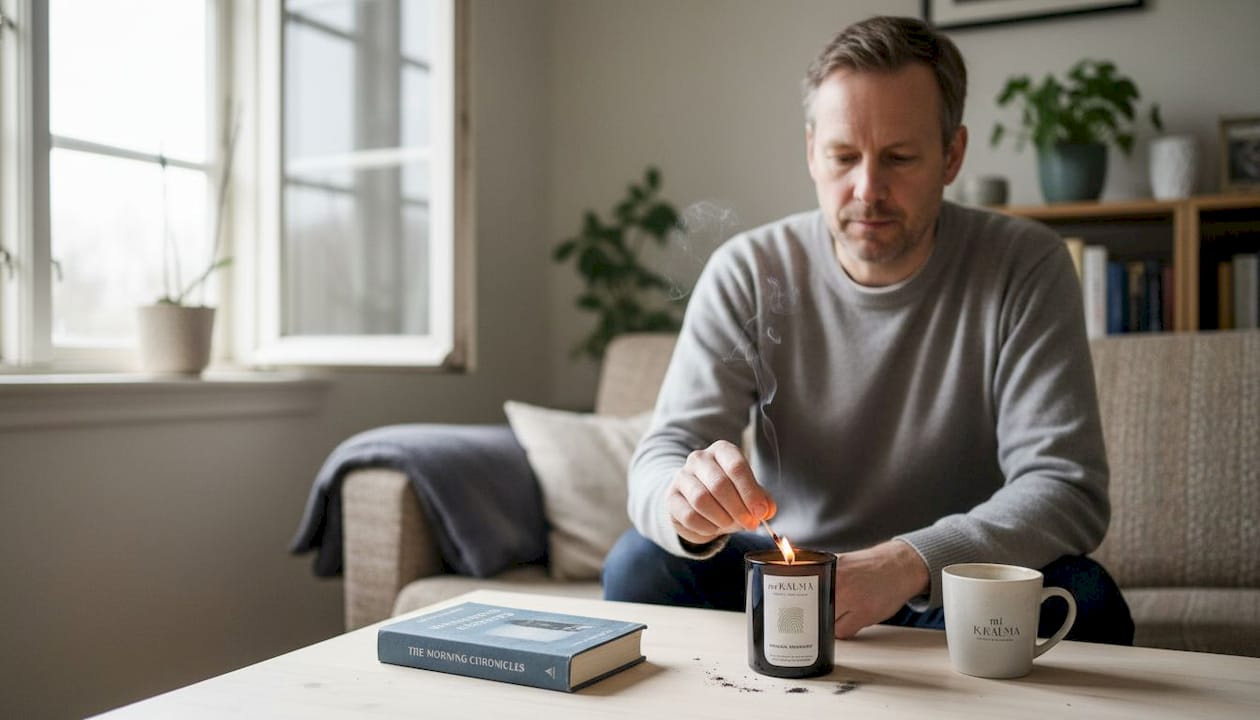
A study published in Frontiers in Public Health examined the effects of scented candle emissions on rats over a chronic exposure period. The results showed elevated inflammatory markers including TNF-α and IL-6, increased oxidative stress, and measurable lung injury. While animal studies do not map directly to human outcomes, the inflammatory response observed points to a plausible biological mechanism for harm.
Scented paraffin candles are the worst offenders. The combination of petroleum-derived wax and synthetic fragrance compounds produces a more complex and reactive emission profile than either component alone. The following factors increase risk:
- Enclosed spaces: Rooms with no open windows concentrate particulates and VOCs rapidly
- Extended burn times: Longer sessions increase total pollutant load in the air
- Synthetic fragrances: Fragrance compounds react with paraffin combustion to produce additional VOCs
- Multiple candles: Burning several candles simultaneously multiplies emissions
- Poor wick maintenance: Untrimmed wicks increase soot output significantly
Ventilation helps. Opening a window or running an air purifier reduces the concentration of airborne pollutants. However, ventilation does not eliminate the source. The candle continues to emit the same compounds regardless of airflow. For a daily wellness ritual, choosing a candle that produces fewer pollutants at the source is a more effective approach than managing the fallout.
Switching to natural wax candles is one direct way to reduce toxic emissions in your home environment. The benefits of premium candles extend beyond aesthetics when the wax itself is cleaner from the start.
Natural wax alternatives: Beeswax, soy, and coconut compared
Natural waxes like beeswax emit virtually no toxins compared to paraffin. But beeswax, soy, and coconut each have distinct properties, and the right choice depends on your priorities around health, sustainability, and performance.
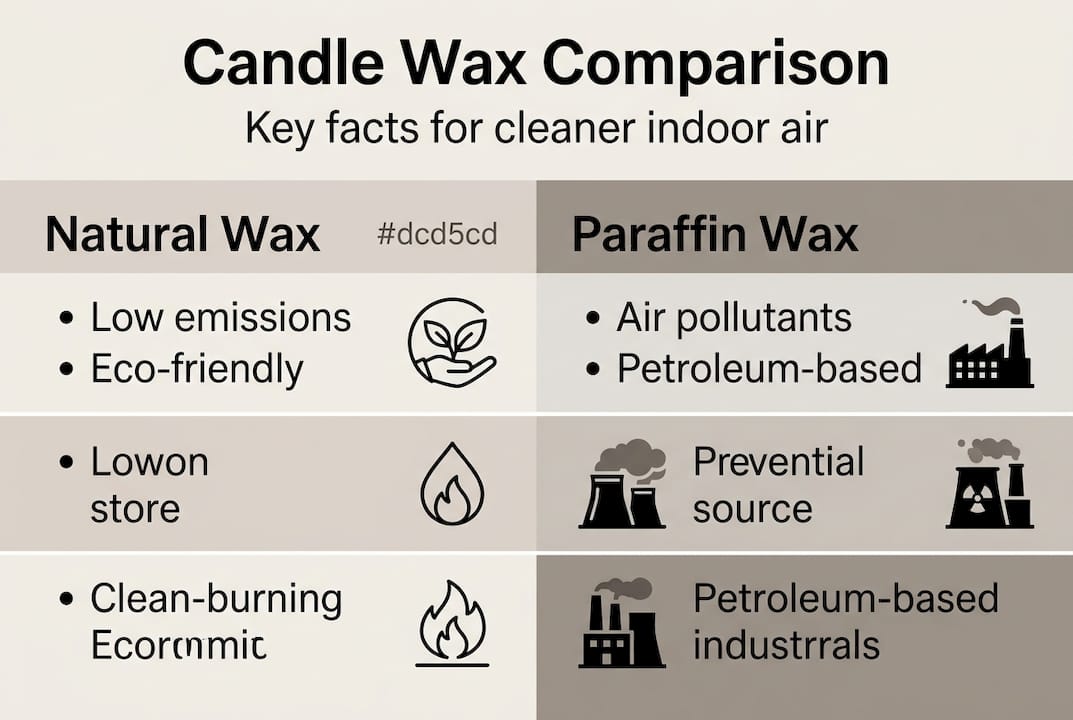
| Wax type | Emissions | Eco-friendliness | Burn performance | Vegan |
|---|---|---|---|---|
| Beeswax | Very low, no VOCs | Moderate (animal-derived) | Long, stable burn | No |
| Soy wax | Low | Moderate (often imported) | Good, softer texture | Yes |
| Coconut wax | Very low | Good (sustainable crop) | Smooth, creamy finish | Yes |
| Rapeseed wax | Very low | Excellent (European crop) | Clean, long, stable | Yes |
Beeswax is the traditional benchmark for clean burning. It produces a warm, natural scent and emits negative ions that some studies associate with air purification. The drawback is that it is animal-derived, which makes it unsuitable for vegan households, and it is among the more expensive options.
Soy wax became popular as a paraffin alternative in the early 2000s. It burns cooler and slower than paraffin, and its emissions profile is significantly cleaner. However, most soy is imported from North or South America, which adds a transport footprint. Some commercial soy candles also contain paraffin blends, so checking labels matters.
Coconut wax offers a clean burn and a naturally creamy texture. It is sustainably harvested and vegan. The main limitation is cost and availability, as it is less commonly used by small-batch producers.
Rapeseed wax, sourced from European crops, is an increasingly recognised alternative. It is renewable, vegan, and has a lower transport footprint than imported soy or coconut. After extensive testing, it delivers a clean, long, and stable burn with strong scent performance, making it well suited to choosing candle wax for daily wellness use. It also works exceptionally well with quality fragrance oils, supporting richer natural home fragrance in the home.
- Beeswax: cleanest burn, not vegan, higher cost
- Soy: widely available, check for paraffin blending
- Coconut: clean and sustainable, less common
- Rapeseed: European, renewable, excellent burn quality
Pro Tip: Unscented natural wax candles are the safest option for sensitive airways. If you prefer fragrance, look for phthalate-free, IFRA-compliant fragrance oils rather than synthetic perfume compounds.
Is all paraffin bad? Exploring nuanced viewpoints
The picture is not entirely black and white. Some research suggests that properly refined paraffin, used with correctly sized wicks in well-ventilated spaces, produces emissions that fall within acceptable health limits.
Properly refined paraffin candles with correct wicking produce emissions comparable to natural waxes and below health thresholds, which is why paraffin holds FDA GRAS (Generally Recognised as Safe) status for food contact applications. That classification is sometimes cited to argue that paraffin candles are broadly safe.
| Condition | Risk level | Notes |
|---|---|---|
| Unscented paraffin, ventilated | Low | Emissions near natural wax levels |
| Scented paraffin, ventilated | Moderate | Fragrance interactions increase VOCs |
| Scented paraffin, unventilated | High | Exceeds EPA outdoor air standards |
| Natural wax, unscented | Very low | Minimal pollutant output |
| Natural wax, quality fragrance | Low | Depends on fragrance formulation |
The nuance matters. A single paraffin candle burned briefly near an open window is unlikely to cause measurable harm to a healthy adult. The concern is cumulative and contextual: daily use in small rooms, combined with synthetic fragrances, over months and years.
Scented paraffin is the worst offender due to fragrance interactions; unscented natural waxes are safest for premium handcrafted calming rituals.
Premium handcrafted candles typically avoid paraffin not only for health reasons but because natural waxes simply perform better. They hold fragrance more evenly, burn longer, and produce a more consistent flame. For choosing premium candles as part of a daily ritual, the wax quality directly affects the sensory experience. A calming home atmosphere is harder to achieve when the candle itself is a source of indoor pollutants. Understanding artisanal candle making helps clarify why small-batch producers invest in better raw materials.
A fresh perspective: Why wellness seekers favour artisan natural wax
The emissions data matters, but it is only part of the story. People who choose artisan natural wax candles are often making a broader statement about how they want to live. They are selecting products made with transparency, from traceable materials, by makers who are accountable for every ingredient.
At mi KALMA, every candle is made in Amsterdam using 100% European rapeseed wax. The fragrance oils are vegan, phthalate-free, paraben-free, cruelty-free, and IFRA-compliant, designed and produced in France specifically for candle use. The fragrance load is 10 percent of total weight, which is why the scent throw is noticeably stronger than mass-market alternatives using 2 to 3 percent. The packaging is recyclable. The business is queer-owned and values-led.
These details are not incidental. They reflect a standard of artisanal candle craftsmanship that wellness-oriented consumers increasingly expect. When you light a candle as a daily ritual, what it is made from shapes the quality of that moment. Purity, craftsmanship, and sourcing transparency are not premium extras. They are the baseline for a candle that genuinely supports calm.
Explore safer, premium candle options for mindful living
If you have been burning paraffin candles without much thought about what goes into the air, this is a practical moment to reassess. The alternatives are widely available, and the quality gap between artisan natural wax and mass-market paraffin has never been clearer.
mi KALMA’s range is built around 100% European rapeseed wax, vegan fragrance oils, and small-batch Amsterdam craftsmanship. The Sanctuary scented candle is a good starting point: a clean-burning, long-lasting option in a timeless black glass jar with recyclable packaging. For the full range of natural wax options, visit the mi KALMA candle shop and find a candle that fits your home and your values.
Frequently asked questions
Are paraffin candles dangerous for people with asthma or allergies?
Burning paraffin candles increases indoor VOCs and PM2.5 particulates, which can aggravate asthma or allergy symptoms, particularly in poorly ventilated spaces. Switching to unscented natural wax candles is a practical step for sensitive households.
Are soy candles a completely safe alternative?
Soy candles produce fewer emissions than paraffin, but some commercial versions contain paraffin blends or synthetic additives. Natural waxes like beeswax emit virtually no toxins, and the same applies to quality rapeseed and coconut wax options.
Does ventilation make paraffin candles safe to use?
Ventilation reduces pollutant concentration significantly, and properly refined paraffin with correct wicking can fall below health thresholds in ventilated conditions. Scented paraffin candles remain more problematic even with airflow, due to fragrance-related VOC interactions.
What is the best candle type for mindful wellness routines?
Unscented natural waxes are safest for daily wellness rituals, minimising pollutant output. If fragrance is important, choose candles using phthalate-free, IFRA-compliant fragrance oils at a meaningful load, such as 10 percent, for both safety and scent performance.
Recommended
- Why natural candles are better for wellness and the environment – mi KALMA
- Why natural wax makes better candles for wellness – mi KALMA
- Choose the best candle wax for wellness in 2026 – mi KALMA
- Why artisanal candle making matters for wellness – mi KALMA
- Spot the signs of poor air quality for a healthier home - Coway Water Purifier