

Wick trimming explained: Enhance your candles and wellbeing
TL;DR:
- Wick trimming improves candle performance, reduces soot, and extends burn time.
- Using specialized wick trimmers ensures clean cuts and debris control, especially for deep jars.
- Regularly trimming a cold wick promotes cleaner burning, better air quality, and mindful candle care.
Most people light a candle, enjoy it, and think nothing more is required. Yet one small, overlooked step separates a candle that performs beautifully from one that smokes, tunnels, and burns out early. Wick trimming takes under a minute, costs almost nothing, and reduces soot by up to 70%. For anyone who values clean air, a calm home environment, and getting the most from quality candles, this guide covers everything: what wick trimming is, how it works, which tools to use, and how to avoid the most common mistakes.
Key Takeaways
| Point | Details |
|---|---|
| Simple yet vital | Wick trimming is a quick, essential practice for cleaner and safer candles. |
| Better health and ambience | A properly trimmed wick reduces soot and indoor air pollution, improving home wellness. |
| Choose the right tool | A dedicated wick trimmer is safer and more effective than household scissors. |
| Mindful rituals matter | Turning wick trimming into a ritual enriches wellbeing and encourages eco-conscious habits. |
What is wick trimming and why does it matter?
Wick trimming is the act of cutting the exposed part of a candle’s wick down to an optimal length before each burn. For most candles, that means keeping the wick at around 5mm to 6mm. It applies to both cotton and wood wicks, and it takes seconds with the right tool.
When a wick is left untrimmed, it grows too long relative to the flame it needs to sustain. The result is a larger, unstable flame that draws more fuel than the wax can cleanly supply. This leads to incomplete combustion, which produces soot, black residue on the jar, and excess smoke. Over time, an untrimmed wick also causes uneven burning, where the wax melts faster in one area than another, wasting a significant portion of your candle.
For eco-conscious households, the indoor air quality concern is real. Soot particles are fine enough to be inhaled and can settle on surfaces, fabrics, and walls. Regular trimming directly reduces this.
Side effects of not trimming your wick:
- Excess soot and black marks on the jar
- Uneven wax pool and tunnelling
- Shorter candle lifespan
- Larger, flickering flame that is harder to control
- Increased indoor smoke and reduced air quality
Benefits of trimming your wick:
- Cleaner, steadier flame
- Reduced soot and indoor air pollution
- Extended candle burn time
- Better fragrance throw from complete wax melting
- A more controlled, calming ambience
Understanding why wick trimmers work so well comes down to one principle: a shorter wick means a smaller, more efficient flame. That flame melts wax at a steadier rate, which supports cleaner burning throughout the life of the candle.
“Wick trimmers are the preferred tool for deep jars and debris catching, offering safer and cleaner results than standard scissors.” — Candy Artisans
For those who treat candle use as part of a wellness or self-care routine, candle trimming as luxury care is not an exaggeration. It is a small act of maintenance that protects both the product and the environment around it.
How wick trimming works: The science and wellness benefits
A candle flame works by drawing liquid wax up through the wick via capillary action. When the wick is too long, it draws more wax than the flame can burn cleanly. This excess fuel combusts incompletely, releasing carbon particles as soot and creating the characteristic mushroom shape at the top of an untrimmed wick.
Trimming removes that mushroomed tip and brings the wick back to a length where the flame burns efficiently. The result is a lower, more stable flame that melts the wax evenly across the surface of the candle.

Trimmed vs. untrimmed wick: A comparison
| Feature | Trimmed wick | Untrimmed wick |
|---|---|---|
| Flame size | Small, steady | Large, flickering |
| Soot output | Minimal | High |
| Burn time | Extended | Shortened |
| Wax pool | Even | Uneven |
| Air quality | Cleaner | More smoke |
| Jar condition | Clear | Blackened |
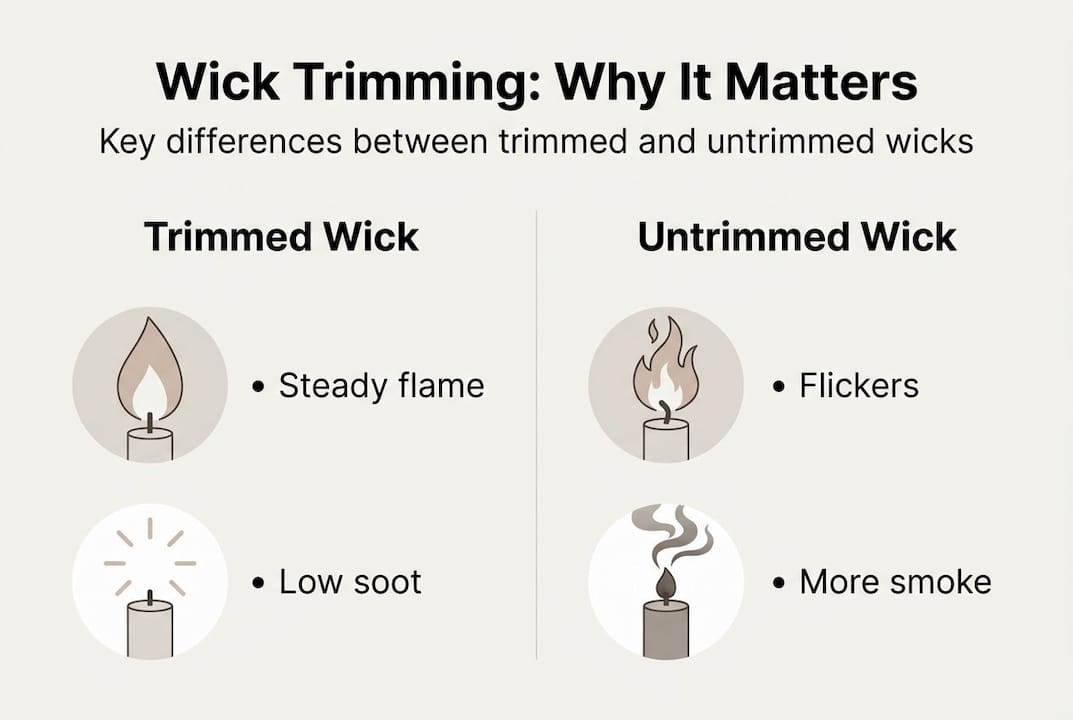
For wellness practitioners, the cleaner air benefit is significant. Less smoke means fewer airborne particles, which supports easier breathing during meditation, yoga, or quiet relaxation. The benefits of wick trimming extend beyond the candle itself and into the quality of the space you create.
How to trim your wick safely, step by step:
- Wait until the candle is completely cool and the wax has set fully.
- Inspect the wick for any mushroomed tip or charred debris.
- Use a wick trimmer or sharp scissors to cut the wick to 5mm to 6mm above the wax surface.
- Remove any trimmed debris from the wax pool before lighting.
- Check the wick is centred before you light the candle.
- Light and enjoy a cleaner, steadier burn.
Pro Tip: Always trim when the candle is completely cold. Trimming a warm wick risks dropping debris into the soft wax pool, which can cause problems on the next burn.
The wick trimmer best practices are straightforward, but consistency matters. Making this a habit before every single burn delivers the best long-term results for both the candle and your home environment.
Choosing the right tools for effective wick trimming
Not every cutting tool gives the same result. The tool you choose affects how cleanly you cut, how easily you can reach the wick, and whether debris falls into the wax or is caught safely.
Tool comparison for wick trimming:
| Tool | Effectiveness | Best use case | Debris control |
|---|---|---|---|
| Wick trimmer | Excellent | All candle types, especially deep jars | Catches clippings |
| Scissors | Moderate | Wide, shallow candles | Poor, debris falls in |
| Nail clippers | Low | Emergency use only | Very poor |
| Fingers | Not recommended | None | None |
Scissors can work for shallow candles with easy wick access, but they offer no mechanism for catching the trimmed portion of the wick. That clipping often falls into the wax pool, where it can cause uneven burning or flare-ups on the next light. Wick trimmers are preferred precisely because their angled head and built-in tray catch the debris before it becomes a problem.
For deep jar candles, which are among the most popular formats for home fragrance, scissors simply cannot reach the wick without risk of touching the wax or the jar sides. A dedicated trimmer is designed with a long handle and angled blade for exactly this situation.
Key features to look for in a wick trimmer:
- Angled cutting head for easy access to deep jars
- Built-in debris tray to catch clippings
- Long handle for comfortable reach
- Durable, rust-resistant material
- Clean, precise cutting action
The wick trimmer benefits for candle rituals go beyond practicality. A well-made trimmer becomes part of the candle experience itself, a small tool that signals intention and care. For those who use candles as part of a mindful home routine, the right candle accessories for wellness make the practice feel considered rather than casual.
Pro Tip: Invest in a dedicated wick trimmer rather than reaching for whatever is nearby. The difference in ease, cleanliness, and result is immediate, especially with premium or deep-jar candles.
Common mistakes and troubleshooting for perfect candle care
Even with good intentions, a few common errors can undermine your candle care routine. Recognising these early saves wax, improves air quality, and extends the life of your candles.
How to fix the most common wick trimming mistakes:
- Trimming while the candle is still warm. Wait for the wax to set fully before trimming. A warm wax pool is soft and any debris that falls in will embed itself, causing problems on the next burn.
- Cutting the wick too short. If the wick is under 4mm, the flame may struggle to stay lit or may drown in the wax pool. If this happens, carefully remove a thin layer of wax around the wick base to expose more length.
- Forgetting to remove debris. Always check the wax surface before lighting. Use a tissue or the trimmer tray to remove any clippings left behind.
- Skipping trims between burns. Even if the wick looks fine, trim it before every single burn. Mushrooming can be subtle and still affect performance.
- Ignoring a sooty jar. Black marks on the inside of the jar are a clear sign the wick has been too long. Clean the jar with a damp cloth, trim the wick, and monitor the next burn closely.
“Never trim a hot wick. Debris falling into the melt pool risks flare-ups and ruins the wax surface for future burns.” — Candy Artisans
Regular inspection is part of a mindful candle routine. Treating each candle as something worth maintaining, rather than simply consuming, reflects an eco-conscious approach to home living. Guides on making candles last longer and preventing candle tunnelling expand on these habits further. Understanding the role of trimmers in candle care as a whole system, rather than a single isolated step, produces the best results.
A mindful approach: What most candle guides overlook
Most candle guides treat wick trimming as a technical footnote. Trim to 5mm, done. But there is something worth pausing on here.
The act of trimming a wick before lighting a candle is a deliberate pause. It asks you to slow down, inspect, and prepare before you begin. In a culture that favours speed and convenience, that small moment of attention is genuinely countercultural.
Choosing to maintain your candles properly is also a quiet statement about values. It means you are not simply consuming a product until it runs out. You are caring for it, extending its life, and reducing waste. That aligns directly with an eco-conscious approach to home living.
A single well-tended candle, trimmed before every burn and allowed to melt evenly, will outlast a neglected one by a significant margin. It will also perform better throughout. Exploring elevating candle rituals as a genuine practice, rather than a marketing concept, starts with exactly this kind of small, consistent action.
Enhance your candle rituals with mi KALMA
If wick trimming has highlighted how much a small tool and a consistent habit can improve your candle experience, mi KALMA offers the next step.

mi KALMA stocks handcrafted candles made from sustainably sourced European rapeseed wax, alongside accessories including wick trimmers designed for deep-jar use. Every product is vegan-friendly and produced in small batches in Amsterdam. The range is built for people who treat candle care as part of a broader home wellness routine, not just a purchase. Browse the full collection to find tools and candles that support a cleaner, more considered approach to home fragrance.
Frequently asked questions
How short should I trim my candle wick?
For best performance, trim to 5mm to 6mm above the wax surface before each burn. This length supports a steady, clean flame without excess soot.
Can I trim my wick while the candle is still hot?
No. Always wait until the candle is completely cold. Trimming a hot wick risks debris falling into the soft wax pool, which can cause flare-ups or uneven burning on the next light.
Is a wick trimmer necessary or will scissors do?
Scissors can work for shallow candles, but a wick trimmer is the better choice overall. Wick trimmers are preferred for deep jars and for catching debris cleanly before it falls into the wax.
Why does my candle smoke even after trimming the wick?
If the wick is correctly trimmed and smoking persists, the issue may be the wax or wick quality itself. Switching to a candle made from natural wax and maintaining regular trimming habits usually resolves the problem.