

How to make candles last longer: a mindful guide for 2026
You light your favourite candle, anticipating hours of gentle fragrance and warm ambience, only to watch it burn through far too quickly. Many wellness enthusiasts face this frustration, finding their premium candles disappear faster than expected despite careful selection. This guide shares practical, eco-conscious techniques to extend your candle’s burn time whilst honouring sustainable living values. You’ll learn mindful care methods that transform each lighting into a longer-lasting ritual of calm and reflection.
Key takeaways
| Point | Details |
|---|---|
| Trim wicks regularly | Keeping wicks to 5mm prevents soot buildup and promotes cleaner, longer burns |
| Create full melt pools | Burn candles long enough for wax to melt edge to edge, preventing wasteful tunnelling |
| Choose sustainable wax | Refillable soy and coconut systems reduce waste whilst beeswax supports pollinators |
| Use proper accessories | Wick trimmers and snuffers preserve candle quality and extend overall lifespan |
What you need to extend your candle’s life
Selecting the right candle type forms your foundation for longevity. Natural wax varieties like soy, coconut, and beeswax burn cleaner and slower than petroleum-based paraffin, offering both environmental and performance benefits. Rapeseed wax, sourced from European crops, provides an exceptional alternative with minimal transport footprint and superior burn stability. These renewable options align perfectly with wellness-focused lifestyles whilst delivering extended burn times.
Refillable candle systems represent the pinnacle of sustainable candle enjoyment. Refillable soy and coconut systems reduce waste by allowing you to purchase wax refills rather than entirely new vessels. Beeswax supports pollinator populations but carries a higher carbon footprint due to production methods. When choosing candles for eco-friendly wellness, consider both burn performance and environmental impact to match your values.
Essential tools transform good intentions into consistent results:
- Wick trimmer: Precision cutting tool designed to reach deep into jars, removing excess wick length cleanly
- Candle snuffer: Bell-shaped extinguisher that prevents wax splatter and wick damage when ending burn sessions
- Stable holder: Heat-resistant surface that protects furniture whilst ensuring even wax distribution
- Lighter with extended reach: Reduces hand proximity to flame, particularly useful for deeper vessels
Each accessory serves a specific purpose beyond mere convenience. Wick trimmers create clean cuts at the optimal 5mm length, preventing the carbon buildup that causes smoking and shortened burn time. Snuffers preserve wick integrity by eliminating the disruptive air current from blowing, which can embed debris into warm wax. Proper holders maintain level positioning, crucial for achieving those perfect melt pools that prevent tunnelling.
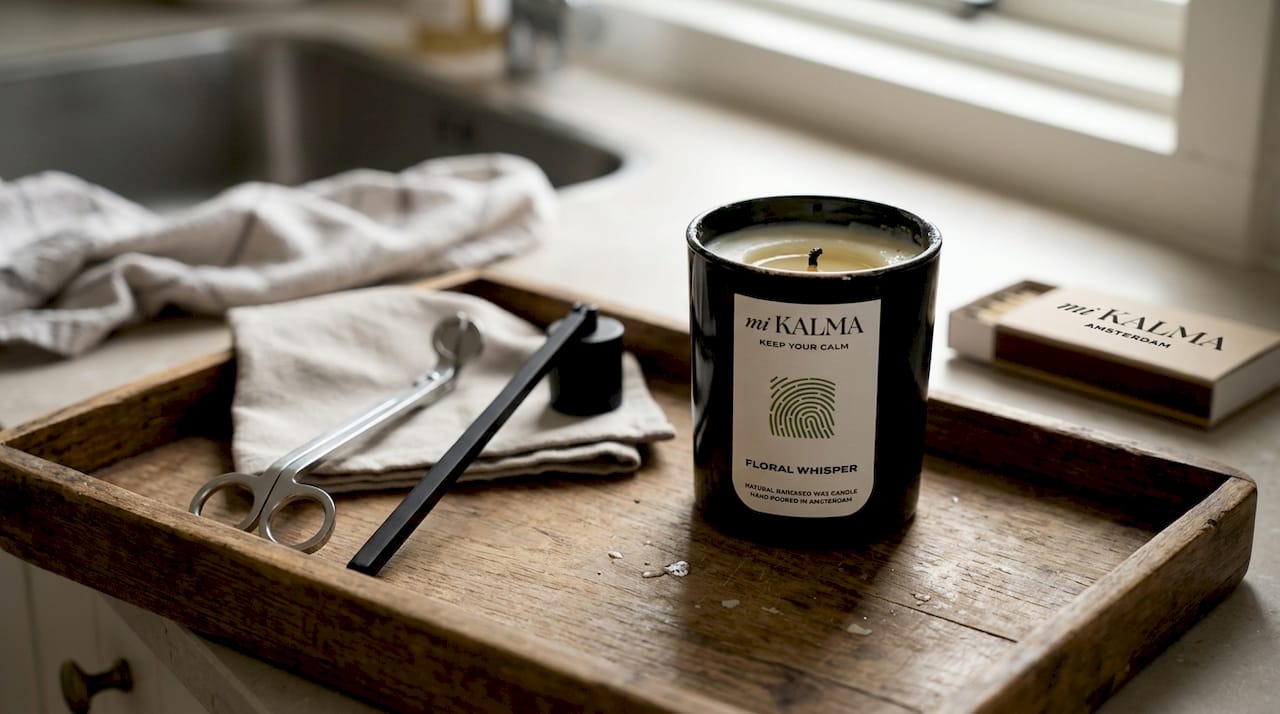
Pro tip: Invest in refillable candle systems with replaceable wax inserts. You’ll reduce packaging waste by up to 80% whilst maintaining the same beautiful vessel for years, turning sustainability into a lasting ritual rather than a single purchase.
Step-by-step guide to burning candles longer and cleaner
Your first burn determines your candle’s entire lifespan. Light your new candle and allow it to burn until the wax melts completely to the container’s edge, typically requiring two to four hours depending on diameter. This initial melt pool sets a “memory” that the wax will follow in subsequent burns. Rushing this process creates tunnelling, where wax clings to container sides and becomes inaccessible, wasting potentially half your candle’s total capacity.
-
Before each lighting, trim the wick to 5mm length using sharp wick trimmers, removing any carbon mushroom cap that formed during the previous burn. This prevents excessive flame height and soot production.
-
Position your candle on a level, heat-resistant surface away from draughts, which cause uneven burning and rapid wax consumption. Ensure at least 30cm clearance above the flame.
-
Light the wick and observe the initial flame for the first minute. A steady, teardrop-shaped flame indicates proper wick length and positioning.
-
Allow the melt pool to reach the container’s edge before extinguishing, typically requiring one hour per 2.5cm of diameter. Never exceed four hours in a single session.
-
Use a candle snuffer to extinguish the flame by placing the bell over the wick until oxygen depletion stops combustion. This preserves wick straightness and prevents wax splatter.
-
Centre the wick whilst wax remains liquid by gently nudging it with a non-flammable tool if it has drifted during burning.
Wick maintenance requires nuanced attention beyond simple trimming schedules.
Burn duration balancing prevents both tunnelling and overheating. Whilst you need sufficient time for complete melt pools, exceeding four hours stresses the wax structure and accelerates fragrance degradation. Premium candles with high fragrance oil concentrations, like those using 10% fragrance loads, benefit from slightly shorter sessions that preserve scent integrity. This contrasts sharply with mass-produced paraffin candles using only 2-3% fragrance, which require longer burns to release any noticeable aroma.
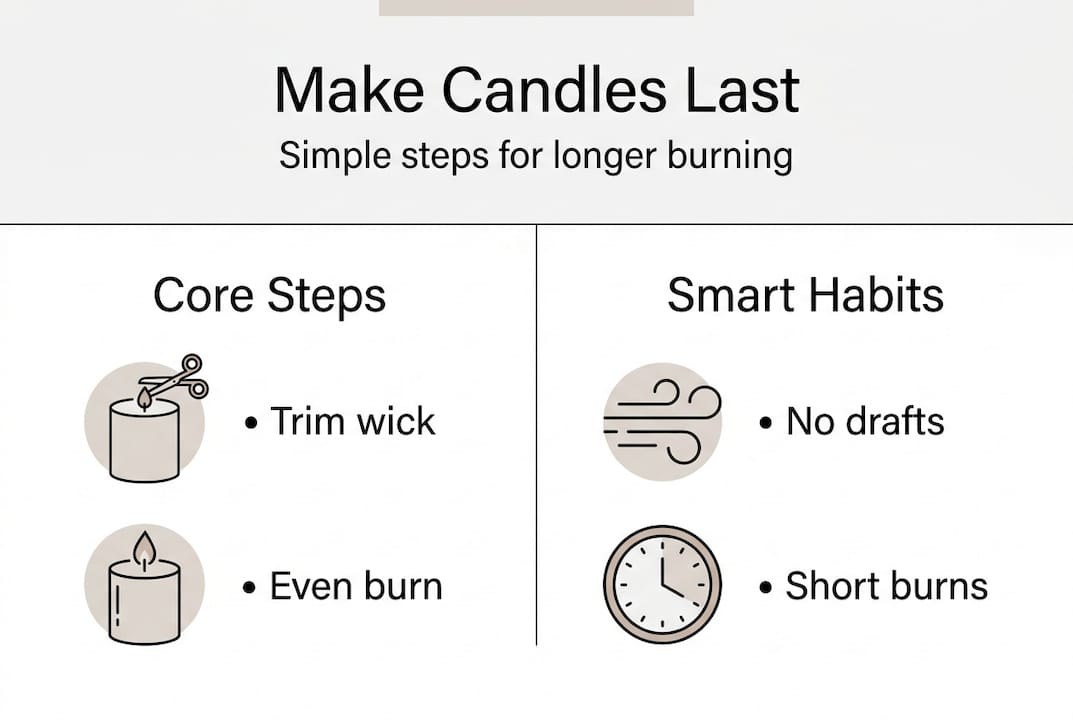
Pro tip: Perform a test burn with new candle types by observing how quickly they form melt pools and whether wick mushrooming occurs. This reveals optimal candle trimming care schedules specific to that wax blend, preventing guesswork in future sessions.
Troubleshooting common candle problems and mistakes to avoid
Tunnelling appears when wax burns down the centre whilst leaving thick walls along container sides. This wasteful pattern stems from insufficient initial burn time or consistently short burning sessions. Once established, tunnelling becomes self-reinforcing as the wick sits in a deepening well with limited oxygen access. Prevention requires patience during that crucial first burn and commitment to full melt pools thereafter.
Excessive soot production signals wick length issues or environmental interference. Black smoke deposits on container rims and ceiling surfaces indicate incomplete combustion, often caused by wicks longer than 5mm or flames disturbed by air currents. Fragrance oil quality also influences soot levels, with synthetic additives and paraffin bases producing significantly more particulate matter than clean-burning natural waxes with premium, phthalate-free fragrance blends.
Mushroom-shaped wick tips form naturally as carbon accumulates at the wick’s end during burning. Whilst generally harmless, large mushrooms can fall into the melt pool and create smoking or uneven flames. However, don’t trim mushroom formations if they lack carbon buildup, as some natural fibre wicks develop this shape without performance issues. Testing reveals whether your specific candle benefits from mushroom removal or performs better with minimal intervention.
Flickering flames indicate environmental problems rather than candle defects. Draughts from windows, doors, air conditioning, or even nearby movement create unstable burning conditions. This not only accelerates wax consumption but also produces uneven heating that damages container integrity over time. The role of trimmers in candle care extends to flame stability, as properly trimmed wicks resist flickering better than overgrown ones.
Critical mistakes that shorten candle life:
- Burning for less than one hour, preventing complete melt pool formation
- Exceeding four-hour sessions, which overheats wax and degrades fragrance
- Neglecting wick trimming between uses, causing soot and rapid consumption
- Placing candles in draughty locations that create uneven burning
- Blowing out flames instead of using snuffers, damaging wick structure
- Ignoring the first burn’s importance in establishing wax memory
Safety consideration: Inhaling candle soot regularly exposes you to fine particulate matter that can irritate respiratory systems. Proper wick maintenance and choosing candles with clean-burning natural waxes and high-quality fragrance oils significantly reduces this risk whilst extending burn time.
Verifying your candle’s longevity and enhancing its mindful use
Observing your candle’s burn quality provides immediate feedback on care effectiveness. An even melt pool that consistently reaches container edges indicates optimal burning practices. The wick should stand straight and centred, with a steady flame measuring roughly 2.5cm in height. Wax surface remains smooth between burns rather than cratered or pitted. These visual markers confirm your techniques are maximising candle lifespan whilst maintaining safety standards.
Wick health assessment requires attention to subtle details. A properly maintained wick shows minimal carbon buildup, maintains consistent thickness throughout its length, and doesn’t lean dramatically to one side. After extinguishing, the wick should cool to a firm texture rather than remaining excessively soft, which suggests overheating. Blackened container rims signal inadequate trimming or poor wax quality, whilst clean glass indicates efficient combustion.
Different candle types offer varying longevity characteristics based on their composition:
| Wax type | Burn rate | Eco-friendliness | Longevity features | | — | — | — | | Rapeseed wax | Slow, stable | Excellent (European sourced) | Superior scent throw, minimal soot, refillable systems | | Soy wax | Moderate | Very good | Clean burning, widely available, renewable | | Coconut wax | Slow | Very good | Excellent scent retention, smooth finish | | Beeswax | Very slow | Good | Natural air purification, higher carbon footprint | | Paraffin | Fast | Poor | Petroleum-based, produces more soot |
Refillable systems using soy and coconut blends offer practical sustainability without compromising performance. Premium rapeseed wax delivers exceptional results through renewable European agriculture with minimal processing requirements.
Mindful candle rituals amplify both wellness benefits and practical longevity. Lighting your candle becomes a conscious pause in your day, a moment to set intentions and create space for reflection. This deliberate approach naturally encourages proper burn duration, as you’re present with the experience rather than leaving candles unattended. Pairing candle lighting with meditation, journaling, or gentle movement practices reinforces the connection between self-care and sustainable habits.
Integrating candle care into broader wellness routines:
- Begin morning rituals by trimming and lighting a candle whilst preparing tea or coffee
- Use burn time as a natural timer for meditation or reading sessions
- Create evening wind-down ceremonies that include candle lighting and mindful breathing
- Pair specific scents with different activities to build aromatic associations
Pro tip: Explore candle aromatherapy’s science and sustainability to understand how fragrance affects mood and wellbeing. Matching scent profiles to your intentions, whether energising citrus for morning focus or calming lavender for evening relaxation, transforms functional candle care into holistic self-care practice.
Discover premium natural wax candles at mi KALMA
After learning these mindful care techniques, you deserve candles crafted to reward your attention. mi KALMA’s natural wax candle collection features 100% European rapeseed wax, chosen after extensive testing for its clean burn, superior scent performance, and lower transport footprint compared to imported alternatives. Each candle burns longer and cleaner than conventional options, maximising the return on your care efforts.
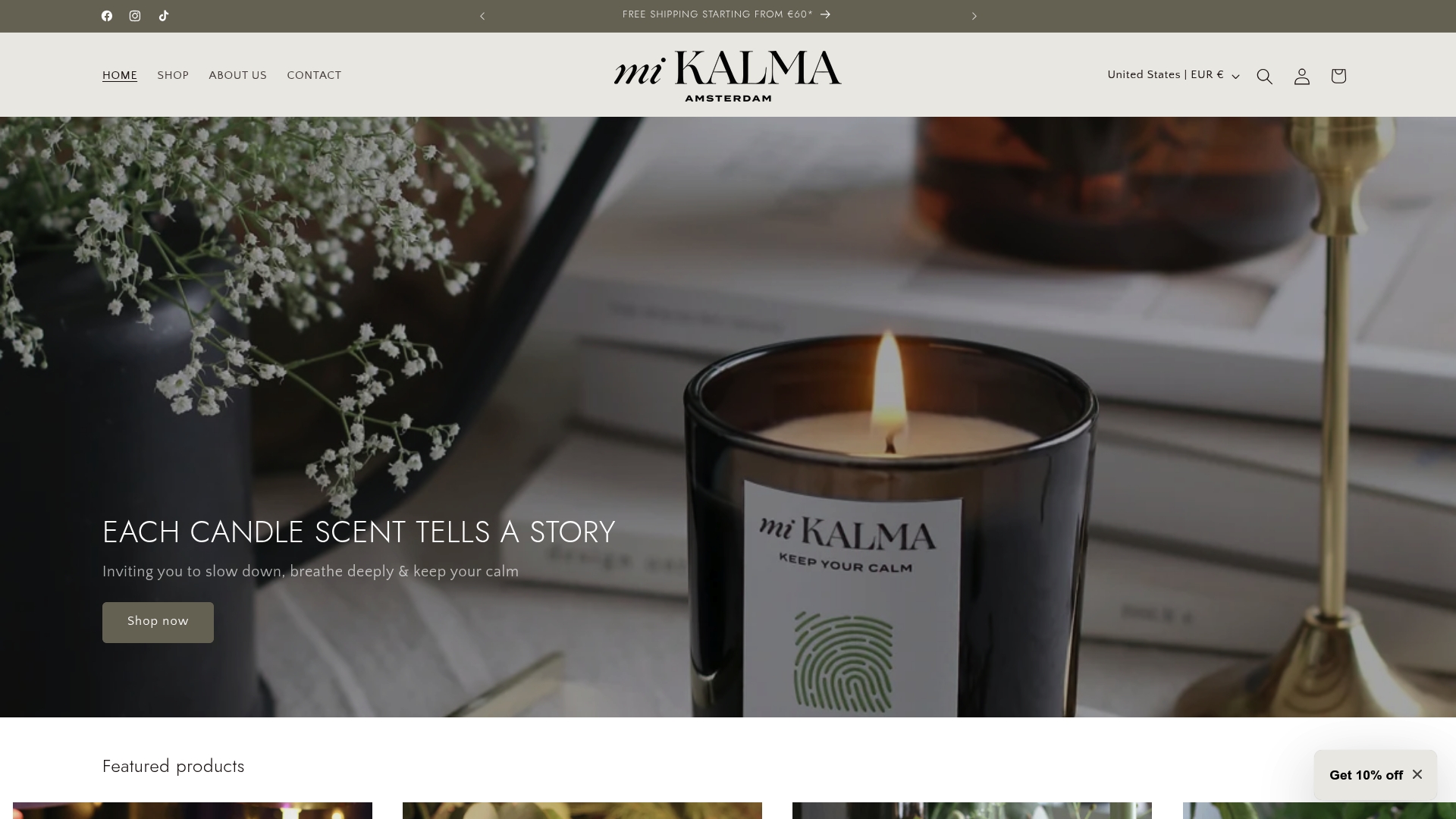
Our vegan, phthalate-free fragrance oils, designed in France at 10% concentration, deliver room-filling aroma that mass-produced candles using 2-3% fragrance simply cannot match. The Sanctuary scented candle creates calming spaces for meditation and reflection, whilst Floral Whisper brings gentle botanical notes to your wellness rituals. Timeless black glass jars complement any décor whilst supporting recyclable packaging commitments. As a queer-owned Amsterdam business, we craft small batches that honour both quality and values, turning each candle into a meaningful choice for your mindful home.
How to make candles last longer: frequently asked questions
What is the optimal wick length for burning candles?
Maintain wick length at 5mm before each lighting. This height promotes complete combustion whilst preventing excessive flame size and soot production. Longer wicks create unstable flames that consume wax rapidly and produce black smoke.
How often should I trim the wick during a candle’s lifespan?
Trim the wick before every single burn session without exception. Even if the wick appears short, carbon buildup and mushrooming occur with each use. Consistent trimming prevents accumulated damage that shortens overall candle life.
Can reusing candle jars aid sustainability and longevity?
Absolutely. Clean empty jars become storage containers, plant pots, or holders for refillable candle inserts. This circular approach reduces waste whilst maintaining the aesthetic vessel you love. Premium glass jars withstand multiple cleaning cycles and repurposing applications.
Why is it important not to burn candles longer than recommended?
Exceeding four-hour burn sessions overheats the wax structure, degrading fragrance oils and potentially damaging container integrity. Overheated candles also consume wax faster than necessary, defeating longevity goals whilst creating safety risks from excessive heat.
Is a candle snuffer better than blowing out a candle?
Yes, using a candle snuffer prevents wick damage and wax splatter that blowing causes. The gentle oxygen deprivation method keeps wicks straight and centred, ready for the next lighting. Snuffers also eliminate smoke and the risk of hot wax spray.
How does fragrance oil concentration affect candle longevity?
Higher quality fragrance oils at proper concentrations, like the 10% used in premium candles, release scent efficiently without requiring extended burn times. Mass-produced candles with 2-3% fragrance force longer burning to achieve noticeable aroma, actually reducing overall lifespan through accelerated wax consumption.
Recommended
- How candles enhance self-care and relaxation in 2026 – mi KALMA
- How to choose candles for eco-friendly wellness in 2026 – mi KALMA
- Best candles for meditation: eco-friendly picks 2026 – mi KALMA
- 7 Inspiring Home Decor with Candles Ideas for Mindful Living – mi KALMA
- Cosmadic Advent Calendar - Homemade! | cosmadic
- Guide to Gin Storage 2026: Preserve Flavor 25% Longer – GIN NIRO