

Improve candle burn time for cleaner, longer-lasting luxury
TL;DR:
- Candle usage practices greatly impact burn time and quality more than jar size or wax type.
- Proper wick trimming, full initial burn, and avoiding drafts extend candle lifespan and ensure a cleaner burn.
- Mindful, deliberate candle use enhances relaxation and sustainability, rather than focusing solely on burn hours.
Most people assume a candle’s burn time is fixed at the point of purchase. The size of the jar, the weight of the wax, the price tag. These feel like the deciding factors. But the truth is that how you use a candle matters far more than how big it is. A poorly maintained luxury candle will burn through wax faster, produce more soot, and deliver less of the scent experience you paid for. This guide covers the key factors that affect burn time, the difference between duration and quality, and the practical steps that protect your investment in a premium, eco-conscious candle.
Key Takeaways
| Point | Details |
|---|---|
| Burn quality beats duration | A clean, even burn delivers more relaxation and value than simply making a candle last. |
| Proper care is essential | Trim wicks, manage session length, and shield from drafts to extend burn time safely. |
| Mindfulness matters | Intentional use of luxury candles improves wellness, not just the hours burned. |
| Avoid common mistakes | Don’t relight without trimming the wick or skip full wax pools; these errors shorten burn time. |
What affects candle burn time?
Burn time is not a single variable. It is the result of several interacting factors, and understanding each one helps you get the most from every candle you light.
Wax type is one of the most significant. Paraffin, the material used in most mass-produced candles, burns faster and at a higher temperature. Natural waxes such as soy, beeswax, and rapeseed burn more slowly and at a lower melt point, which extends burn time and produces a cleaner flame. At mi KALMA, we use 100% European-sourced rapeseed wax, a renewable crop grown close to home with a lower transport footprint than imported soy or coconut wax. After extensive testing across natural waxes, rapeseed delivered the most stable, clean burning result with the best scent performance.
Wick size and material also play a direct role. A wick that is too thick will draw more wax and burn hotter, shortening the candle’s life. A wick that is too thin may drown in the melt pool. Well-matched wicks, trimmed to 6mm before each use, keep the flame controlled and the burn efficient.
Vessel shape affects how heat distributes through the wax. Narrow, deep vessels can cause uneven melting. Wide, shallow vessels allow wax pools to form more easily. Our timeless black glass jars are designed to support an even melt pool and a stable burn environment.
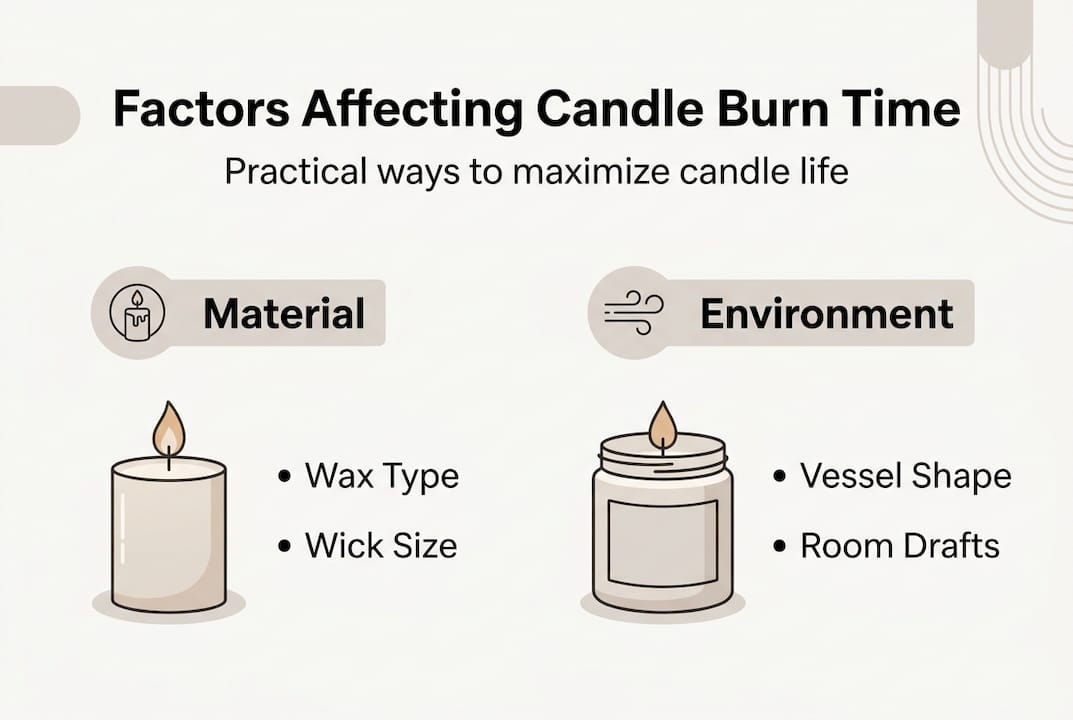
Environmental conditions are often overlooked. Draughts redirect the flame, cause uneven burning, and accelerate wax consumption. A candle placed near an open window or air vent will burn noticeably faster than one on a stable surface in a still room.
Here is a quick comparison of common wax types:
| Wax type | Burn speed | Soot output | Scent throw |
|---|---|---|---|
| Paraffin | Fast | High | Moderate |
| Soy | Slow | Low | Good |
| Beeswax | Slow | Very low | Mild |
| Rapeseed | Slow | Very low | Excellent |
Key environmental factors to control:
- Keep candles away from open windows and fans
- Place on a flat, heat-resistant surface
- Avoid burning in high-traffic areas with air movement
- Store unused candles away from direct sunlight
It is worth noting that ASTM candle safety standards such as F2417 and F2058 focus on fire safety, covering flame height under 3 inches and stability requirements. They do not govern burn time directly. Maximising burn duration is entirely down to how you care for the candle. You can find more practical guidance in our article on how to make candles last longer.
Burn time versus burn quality: Why both matter
Knowing what affects burn time is useful. But there is an equally important distinction to make: the difference between a candle that burns for a long time and one that burns well.
A candle can technically last many hours while still delivering a poor experience. Tunnelling, where the wax melts only in a narrow channel around the wick, is the most common example. It leaves thick walls of unmelted wax and dramatically reduces the total usable burn time. It also weakens scent throw, because the fragrance trapped in the unmelted wax never fully releases.
Soot is another quality issue. Paraffin candles typically use only 2 to 3 percent fragrance oil, which limits scent performance and contributes to the black residue you sometimes see on jar walls and ceilings. By contrast, mi KALMA uses 10 percent fragrance oil by total weight. Our oils are vegan, phthalate-free, paraben-free, cruelty-free, IFRA-compliant, and produced in France specifically for candle performance. The result is a strong, room-filling hot throw without the toxic load.
For a genuinely high-quality burn, candle safety guidance from the National Candle Association recommends burning to the edges on the first use, approximately one hour per inch of diameter. This sets the wax memory and prevents future tunnelling.
Steps for a quality burn session:
- Trim the wick to 6mm before lighting
- Allow the wax pool to reach the full diameter of the vessel
- Keep the burn session under four hours
- Extinguish cleanly using a snuffer, not by blowing
- Allow the wax to cool fully before relighting
The wellness dimension matters here too. A clean, steady flame with a well-balanced fragrance oil creates a noticeably different atmosphere than a flickering, smoky one. Investing in candle trimmer benefits is a small step that pays off in both air quality and sensory experience.
A candle that burns cleanly for 40 hours delivers more value than one that burns poorly for 60.
How to maximise your candle’s burn time
These habits are straightforward. Applied consistently, they make a measurable difference to how long and how well your candle performs.
- First burn matters most. Allow the wax pool to reach the full edge of the vessel before extinguishing. For a 7cm diameter candle, that is approximately two to three hours. This single step prevents tunnelling in all future burns.
- Trim the wick before every burn. Keep it at 6mm (quarter inch). A longer wick produces a larger, less stable flame that consumes wax faster and creates more soot. The NCA recommends trimming to 1/4 inch and limiting sessions to under four hours.
- Limit sessions to four hours maximum. Beyond this, the wick becomes saturated and the flame grows less efficient. The candle also heats the vessel to a point where the wax pool becomes too deep.
- Stop when 1.5cm of wax remains. Burning past this point risks overheating the vessel and reduces fragrance quality. It also protects the jar for reuse.
- Shield from draughts. Even a gentle breeze from a nearby door causes uneven burning. Choose a sheltered spot on a stable surface.
Additional tips to protect burn time:
- Store candles with lids on to prevent dust settling on the wax
- Avoid placing candles near heat sources between uses
- Rotate the candle slightly if you notice uneven pooling
- Learn how to prevent tunnelling before it becomes a problem
Pro Tip: A quality wick trimmer gives you precise control over wick length and keeps clippings out of the wax pool. See our guide on using wick trimmers for step-by-step instructions.
Common pitfalls and how to avoid them
Even well-intentioned candle users make mistakes that reduce burn time and overall enjoyment. These are the most frequent ones.
Relighting without trimming the wick is the most common error. An untrimmed wick creates a larger, hotter flame that burns through wax quickly and leaves black marks on the jar. Wick trimming prevents soot and ensures a more complete, efficient use of the wax. According to our own testing, consistent trimming can cut soot by 70% compared to untrimmed burns.
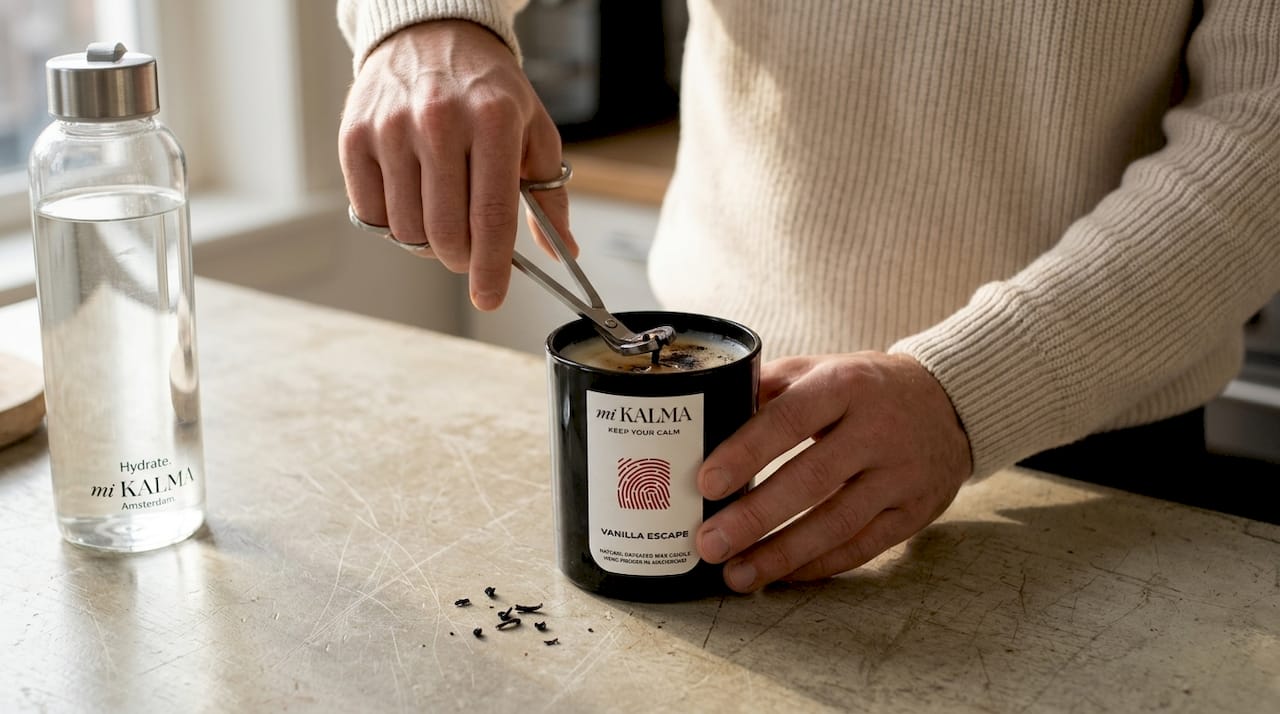
Ending a burn session too early is almost as damaging. If you extinguish a candle before the wax pool reaches the edges, the wax develops a memory of that shallow pool. Every subsequent burn will follow the same pattern, creating a tunnel that leaves wax on the sides permanently wasted.
Burning in draughty conditions causes the flame to flicker and lean, melting wax unevenly and shortening the overall life of the candle. It also affects fragrance diffusion.
Ignoring the four-hour guideline is a safety and quality issue. Sessions beyond this point increase the risk of overheating and reduce the quality of the remaining burns.
Mistakes to avoid at a glance:
- Lighting without trimming the wick first
- Stopping a burn session before the wax pool is full
- Burning near open windows, fans, or air vents
- Continuing past the 1.5cm wax remainder mark
- Blowing out the flame, which pushes wick debris into the wax
For a full overview of safe, effective technique, our guide on proper candle burning covers each step in detail.
Pro Tip: Make wick trimming a small ritual before each burn. It takes under ten seconds and has a direct impact on both safety and the quality of your experience.
A new approach: Less is more for true relaxation
There is a tendency to measure a candle’s value in hours. The longer it burns, the better the purchase. But this framing misses something important.
The candles that deliver the most satisfaction are not necessarily the ones that last the longest. They are the ones used with intention. A 30-minute burn during a quiet evening, with a trimmed wick, a still room, and no distractions, offers more genuine relaxation than three hours of distracted burning while the flame flickers in a draught.
Sustainability works the same way. Fewer, more deliberate sessions reduce waste, extend the candle’s life, and make the experience feel considered rather than incidental. This is what mindful candle rituals actually look like in practice.
At mi KALMA, we make candles in small batches in Amsterdam, using recyclable packaging and natural rapeseed wax, because we believe the product itself should reflect the values behind the ritual. As a queer-owned independent brand, we are not interested in volume for its own sake. We are interested in quality, and in candles that genuinely contribute to a calmer environment. Burn time matters. But the practice around it matters more.
Discover the difference: Elevate your candle experience
Ready to get more from every burn? mi KALMA’s handcrafted candles are made with 100% European rapeseed wax, 10% IFRA-compliant fragrance oil, and designed for a clean, long-lasting burn from the first light to the last.
Explore our range of luxury natural candles and find the scent that fits your ritual. If you want to go further, our guide to luxury candle care covers everything from trimming technique to storage. Small adjustments, consistent practice, and the right candle make a measurable difference to your home and your wellbeing.
Frequently asked questions
How long should a typical luxury soy candle burn?
A well-made soy candle generally burns 7 to 9 hours per ounce when cared for with proper wick trimming and session limits of under four hours.
How can I prevent my candle from tunnelling?
Ensure your first burn reaches the edges of the vessel before extinguishing, then avoid short, incomplete sessions in future burns.
Is it safe to burn a candle for longer than four hours?
No. Candle safety guidelines recommend a maximum of four hours per session to reduce soot build-up and fire risk.
Does trimming the wick really increase burn time?
Yes. A trimmed wick produces a stable, efficient flame that reduces soot and waste, resulting in more complete wax use across the candle’s life.
Can burning eco-luxury candles improve home wellness?
Eco-luxury candles made with clean waxes and high-quality fragrance oils, used with safe burning practices, can support relaxation and reduce indoor air pollutants compared to paraffin alternatives.